Saturday, January 17, 2009

Medal

The designer of Kanteerava, inspired by Legos as a child, limited his expression to boxy crenellations and bland geometry. The structures current crumbling decay makes it appear as if it was a particle board spec of the Roman Coliseum constructed during the bidding process before the designer was passed over for what would later be referred to as the ‘Baby Blue Fiasco’ since the only thing extraordinary about it was the color that stimulated the cornea while dampening the testosterone levels of all who entered. It probably resulted in all the misspent public funding and all the political acrimony usually only enjoyed by light rail projects.

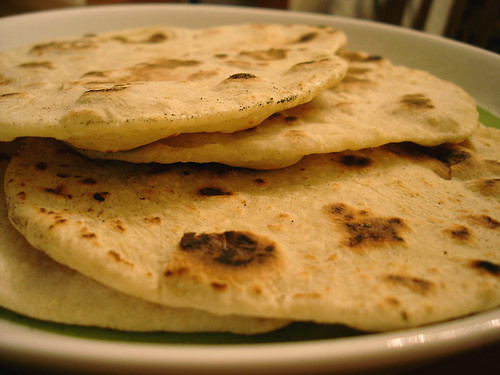
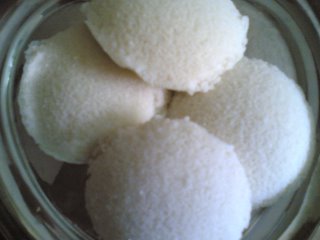
The athletes that spill from the hostel onto the fields and courts encircling the grounds are not so much sinewy gladiators but instead sport the kind of gristle built of roti, idlis, and dosas in tiny, unsatisfying portions which are common meals and nothing more than flour and water in differing densities used to sop up masalas and curries made with vegetables so thoroughly boiled down that it would take a forensics team to identify the recipe. The stuff is tasty as heck once generously spiced, but still it’s all flavor and fill with no real fuel. The liberal addition of chilies is meant to shift attention from bellies burning with hunger to tongues burning with capsicum. It’s why I fear the stray dogs that hunt the grounds since I’m the most substantial prey to the roaming and the rabid and I expect that beyond my meaty frame, they can sense with the honed instincts of the under-nourished that my 400m run times are weak and easily chased down.

I walked towards the back gate of the stadium grounds on my way home from yet another weightlifting practice swinging the key to my apartment which requires no key chain since its so large I feel as if I’ve been granted an honorary key to a small village or perhaps my lock had been salvaged from a catacomb door behind which a cask of Amontillado was stored. My neighborhood is a crowded disorderly row of apartment buildings bound together with laundry strung like prayer flags. Encroaching the street are buildings with the pastel palate and the slender proportions of runway models enticing socialites with the have-to-have spring collection and scooters parked haphazardly at doorsteps like show props, it reminded me a little of Venice if Venice were overcome by the kind of disinterest in upkeep and accumulation of dust that might plague the city post nuclear fall-out and after the canals inexplicably went dry.

‘Do Not Commit Nuisance Here,’ is posted every five feet in a jaunty little cursive along a wall that is hosed down almost continually by a stream of urine from the auto drivers who eat at a Veg stall right outside the gate I was exiting. On my short walk home, I first weave through a flock of drivers who stand about like pigeons pecking Palav off metal plates. I sometimes want to toss rocks to see if they’ll squawk and flap or even mix Alka Seltzer in with their idlis to see if their tummies will explode. That’s only on mean days when practice goes badly.

Where the sidewalk mercifully widens, I’m confronted with the foulness of the splatter-patterned wall that looks like it was the scene of an attack by Super Soakers. Urine runs to the street in eight ounce streams. I tiptoe so that the puddles don’t soak my gel padded Addidas flip flops that have proven to be an unfortunate choice for India. Given that urine is rumored to be a spectacular cure for Athletes foot, my sandals are constantly on the brink of becoming nothing more than a medicinal applicator pad for a fungus I don’t even have.

I was even treated to full frontal nudity as a man squatted facing the street with his pants circling his ankles. He was defecating while waddling slowly forward to leave a broken dot/dash pattern on the sidewalk which I could only assume said something like ‘can you please spare some toilet paper?’ in Morse code. Apparently relieving oneself in public does not fall under the umbrella of ‘nuisance’ in India which I think needs to be defined more clearly.

“’YESH!’” Ganesh repeated for the fourth time only louder and more clearly enunciated, “WRITE IT!” My pen was left circling over paper without clearance to land as I was uncertain how exactly to represent ‘yesh’ on paper. I assumed it was a symbol similar to ‘the artist formerly known as Prince.’ “BUT IT’S NOT A LETTER IN THE ALPHABET!” I repeated between giggles at about the same volume and clarity. We had only tackled the first letter of ‘Sampangi Rama Nagar’, which is the name of my neighborhood, and already there were problems. My official address actually includes the words ‘Across from Kanteerava Stadium’ which has a friendly sort of chatty element to it like it should also naturally include a greeting to my postman and the common inquiry ‘have you had your breakfast?’ It lacks the sort of precision required for a 911 dispatch which in other countries is a reasonable goal for an address.

But then, I got to see first hand what a 911 response looks like here and I couldn’t help but wonder if service that poor is intentional. After all, in a country where agrarian ties are still strong, a practice like culling the herd makes good, practical sense though it would appear heartless if a token effort wasn’t made to respond during an emergency. A fumbled address was not a plausible excuse when one of the Athletes from Kanteerava, which is also across the street from Malya Hospital, injected himself with the medicinal equivalent of a ‘get rich quick scheme’ that in this country could have been a cocktail of veterinary meds, expired antibiotics bought over the counter and a pinch of turmeric. Whatever works especially since no one can be bothered doing the research when it comes to ‘performance enhancement’ schemes. I was horrified when, after he passed out in a room full of barbells, we were expected to hoist him up and carry him out to a jeep ourselves partly because the malnourished and barefoot ambulance crew of one could scarcely lift himself and partly because there was no such thing as a stretcher anyway.

Curious, I did a little cruise on an online PDR to research the black market elixir only to discover that the performance enhancer, though arguably tinkered with oxygen uptake in an agreeable way, also tended to make a person dizzy which seems like nothing but folly if you’re planning to throw significantly more than your body weight over your head in one rapid movement. Though his snatch numbers were high, his IQ appeared to be on the low side and consequently he and my sometimes female coach [or rather my always-female but sometimes coach] were bounced from the stadium program after lockers opened to the light of day exposed a pharmaceutical wet bar though given the run-down and dusty confines and the scattering of smudged bottles, probably more like Sid and Nancy’s bathroom. Athletic careers over, there were rumors of hasty marriages arranged on the next auspicious days after the drama.

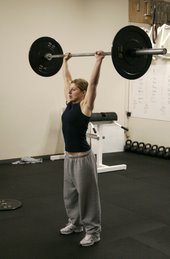
This left me and Sharada Siddi to represent Kanteerava in the upcoming State weightlifting competition and though nothing had really changed, I felt obliged to collect the gold metal lost the moment the other female lifter was locked out of practice. And not that I didn’t stick out already considering I was the only white lifter competing, but walking into a meet in the shadow of Sharada – a lifter whose 53 Kilo frame was as solid, fast and fear-inducing as a medieval catapult – implied that I too would be a worthy competitor which wasn’t necessarily true. Like a major league pitcher in his rookie year who has a good arm but an unsettling habit of broadsiding batters with the occasional wild pitch, my snatch was still random and sometimes unrecognizable as one of the three required lifts.

After meditating one day – well, because this is India – I realized that part of my problem was a dysfunctional relationship with my equipment. If it’s true that we’re sending a message out into the universe that’s influencing our results, my message was as unclear to the universe as my English is to most of India. I approached a weighted bar with a kind of trepidation that had me almost sneaking up on it with the thought “hmmm, I wonder what it’s going to do this time.”
Refusing to take any responsibility for how things were going to go, I was letting the bar decide.

As diplomatic as that sounds, you can imagine the kind of results I got. I spent the next couple of weeks in what amounted to couples therapy with my 15K cohort and it started by kissing it hello. This sounds crazy but everybody in the gym, and as it would turn out, everybody at the meet, gave the bar some sort of referential peck. In my own act of American civil disobedience, I opted for a slippery, porn inspired smooch in the hopes that the other athletes would be strategically unsettled.

It was about the time that me and the bar renewed our vows – I promised to communicate more clearly, it promised not to maim or disfigure me – that’s when Sharada and Basava decided what weight class I would compete in and what my opening lifts should be. Basava or Basva which is pronounced ‘Baswa’ picked numbers that exceeded my one-rep-max by at least ten kilos. For the weight class, I’d have to lose two kilos. I tried to smile when he said, “you do,” the way he does. And that’s when all the fun began.

My thumbs, which have ached for at least a month now because they need to wrap around the bar during the snatch and then get tucked tightly under my fingers on the other side, began to throb. They especially complained every time I mounted my hands on my hips, a genetic marker identifying me as my mother’s daughter, and it’s something I do in the slight exasperation experienced when a trainer offers completely unfounded reasons why Arnold Schwartzenegger should be president of the United States other than his political leanings of which they know nothing. And this topic comes up often, by the way.

I’ve stopped listening and/or replying whenever Arnold’s name gets a mention and I think we all enjoy that better. In fact, I’d wager the guarantee of silence on my part is why the topic is so persistent. I just mount my battered thumbs on my hips making the experience all the more painful and try not to imagine that their collective will might materialize in a Schwartzenegger ‘Terminator in Chief’ simply because India made it so. And, not because I know much about Arnold’s political leanings either but because I never want to see that look on all the trainer’s faces that says that Arnold’s presidency alone confirms that silly things like data and facts have no place in an intelligent argument. Ganesh is even now refusing to listen to a word I have to say about body building which he’s decided I know absolutely nothing about for the sole reason that I didn’t know Arnold had four kids until he told me.

It’s times like this that I yearn to scurry off to the dusty, warped plates of Kanteerava and away from the Bollywood Glamaerobics of Gold’s Gym. The trainers are wonderful and friendly but just when I think I’m on the brink of an actual conversation with one of them, I catch their eyes dart to the mirror as they check their own biceps. Yep, still there.

In some outdated textbook somewhere there’s a chapter about how quickly lean mass melts away like Ghee. Since, I’m told, books are almost always stolen in-transit, any efforts to correct that misconception have been lost to the black market. As a result, I expect there’s a Crash Cart and a protocol inspired by ‘ER’ that administers an emergency dose of Dumbbell Concentration Curls to any trainer whose vital bicep circumferential measurements dip below normal. They can’t resist peeling back their shirts and having a little fling with themselves in the mirror periodically and I, a hopeless romantic myself, don’t wish to be an obstacle in the path to true self love. I just stand quietly in my Gold‘s gym T-Shirt and try to pretend that the insignia on the front isn’t encouraging an obscene act – that of an innocent Olympic Bar being curled for the sake of pretty arms. Should you ever attempt to do that in a CrossFit gym, you would be soundly beaten – for time.

Days in which you’ve hit an all-time low are never planned and aren’t scrawled on calendars anywhere in the appropriate pen color that would designate such a thing. They’re more of an interesting road sign that you notice on your way to somewhere else. Take Bucksnort, Tennessee for which I noticed an exit off the highway in 1995 while driving across country. I didn’t go to Bucksnort, had never planned on it but now I know where it is and have a photo taken out the passenger window to remind me. On Tuesday, January 5th I had a meal of egg whites with no salt and Nescafe instant coffee with no sugar. I hit a culinary low and have noted where it is. I can now measure bad taste by asking myself the question, “Oh, this is bad but is it Egg-Whites-and-Nescafe bad or just bad?” It was previously the question, “Is it boiled-peanuts-outside-Atlanta bad or just bad?” but that was a low water mark set in the 80s and the true ‘badness’ has worn thin over time. This new badness will be defined by whether or not I have the urge to lick my own arm between bites just for flavor.

Without the culinary magic of egg whites au natural, it would have been easy enough to lose the two kilos but any drastic cut in calories would have affected my ability to lift which would have made last minute cramming out of the question. The snatch had never been particularly heavy just poorly executed. I could bully it - knock it down and taken its lunch money - but I couldn’t keep it overhead which means I still needed to practice with a good amount of volume. I cleaned up my proteins, removed as much carbohydrate as possible without killing my recovery and shifted to full-gear intermittent fasting which means my last meal of the day was at 2:30p after which I would eat nothing else until breakfast. My caloric intake remained the same which allowed for the training but try telling that to my rumbly belly that kept suggesting tasty little snack options that would pair nicely with my cinnamon tea - suggestions that kept getting between me and my e-mail. Oh, “peanut Chikki” my tummy would coo, “not the brittly kind but the dry, cookie-like peanut-buttery stuff they sell at Thoms Bakery, mmm.” Then, less sweetly, “Hey! Did you frickin’ hear me up there!”

I’m not saying there was joy in my heart. I threatened to kill Ganesh daily and meant it. That was especially true on the day that the ‘long fellow’ - because Ganesh isn’t familiar with the word ‘tall’ - passed along a solid misshapen Tirupati Laddu, a mass of baked good, that was heavy, lumpy, studded with raisins and cashews and meant for Ganesh. It looked like a scone that had been birthed. It was ‘Food of the Gods’ brought back from Tirupati where it was made only there but gobbled up all over India when brought back as prasadam. I made disparaging comments about how Indians had simply stolen it off the plate of British High Tea, repackaged it, improvised randomly, called it something else and then got defensive about it if you ever implied it could be made better. “You know, like they do with all their other cheap knock-offs!” I said trailing off my rant as I faced the blank stare and a mustache full of crumbs on the man who lost me three words into my rapid-fire English hissy fit. Really it was grade school hair-pulling and I yearned to swallow it whole. So, apparently, did Ganesh as he indulged in the kind of lip-smacking noisy maceration that would drive my sister nuts. Instead, I just threatened to kill him.

On the last night before the event, finally two kilos lighter and about twenty degrees colder thanks to the distant memory that was my last meal, Sharada called from Mangalore. She had become a really exceptional coach to me in the last few weeks even though, as an athlete competing in the same event, it really wasn’t her job. The man who has that title trains telepathically, I gather. Though I grew to truly appreciate her, I usually screened her calls. We could work most things out in person but her understanding of the English language was very poor and my understanding of Kanada was completely non-existent so that phone calls were impossible and usually ended with one of us sort of randomly hanging up when noise stopped. Given the timing however, I answered and what she said in her clearest English ever was that I needed to gain the weight back before morning.

When I got off the phone, I deliberated. The girl in me wanted to stay lighter, use the momentum to make a bid for my skinny jeans and pack on the difference with water I’d drink right before I weighed-in. The lifter worried that two kilos of water would make me throw up when my belly hit my thighs at the bottom of the squat. My freezing cold hand flipped both of them the finger and tore open a package of peanut chikki with my teeth to shove between my purple lips before I scooped up my bag and headed for the bus. Part of me worried that Sharada would change her mind again. That would have caused stress except that the Sari factory downstairs was in production later than usual because of the daily mid-day power outages and the thump, thump of the loom acts as a sort of pacemaker until my heart rate aligns with the pulse of the silk and gold threads. I only notice it during moments when I can sense stress but just end up feeling out of sorts like a tickly sneeze that wont trigger or when the power goes out and I wonder if I'm going into ventricular-fib.

Peanut chikki, with it’s near 50/50 proportions of sugar and fat, is not a snack that can be easily undone and as it was Sharada did waver a couple of times when news came that the lifter whose weight class I was trying to bail out of had gained weight as well. We talked about it in the morning as if losing the two kilos again before the event was going to be anything other than a miracle. I had already used up my one miracle getting there alive and I was tired from all the earnest prayer through the all-night bus ride. No wonder Hindus make no effort to convert the masses, given that India's roadways are a route to God.

I would have assumed that going from Bangalore to Mangalore is simply a backspace followed by a poke two keys to the right on a QWERTY keyboard but that’s just because I’ve always been a smart ass. By the time I arrived at Mangalore Town Hall I had spent at least eight hours in a sleeper coach and, though I didn’t notice until the way back when I was no longer playing ‘good snatch/bad snatch’ in my head, I’m pretty sure we simply aimed the bus towards Mangalore and drove over whatever stood between Point A and Point B, road or no road. I was so cold both on the way there and on the way back that I was about to gut a passenger and crawl inside the carcass for warmth but one look at the scrawny travelers and I could see there was nothing in my size. The best I could have done is fashion a shawl and some ear muffs.

When I got to Mangalore Town Hall I was confronted with the Indian equivalent of the Pine Grove Grange with a stage and a sign courtesy of Bank of India that read, “Wishing The Function A Very Success.” Um, thanks. One of the organizers greeted me warmly when I arrived which I think was big of him since it turned out he was the secretary of the weightlifting association, had on office in Kanteerava stadium, likely knew the coach was a no-show and had just found out recently that there was a white girl letting herself into the building for the last couple of months. He was not a man with a bald spot but a bald man with a hair spot that originated at the extreme lower corner of his head to the left of the medulla obbligato. It flapped excitedly from time to time and because it looked like a creature in its own right, I watched to see if the movement was caused by one of the oscillating fans or if something was making it happy. He had taken the splotch of hair, weaved it into a lacey mesh and swirled it around his head like soft-serve ice cream. Donald Trump should pay this man to stand next to him in photos.

As I watched the competition commence it appeared that most of the lifters in the low weight classes were skinny teenagers living on meager rations with a dancer’s flexibility and good technique. They had the balls to step under falling weight but not the brawn to support it. Most of them lacked the raw materials for anything other than their opening lifts which is apparently all the propulsion one gets from roti. There were a few lifters scattered through the weight-classes that were solidly built and technically proficient and I couldn’t come near their numbers. Sharada was obviously one of them and ended the day with the Best Lifter distinction as well as her usual Gold with combined lifts of 147 Kilos.

She’s been lifting for fifteen years and works for Karnataka State Police where she is paid only to train and compete which is sad in a way considering that she’s the only police officer I’ve seen that appears to be fit enough for the job. I was able to determine based on the jeep parked in a quiet, shady spot outside the stadium, that the hat worn by officers which is flattened on the left side for what I thought was a stylish flair is actually a practical feature which allows officers to sleep in full uniform lolling their heads to the flat-side so as not to crush their brim.

Before she completed her lifts, she sent me back-stage for the weigh in which I was able survive by downing a protein shake and thinking heavy thoughts. The mood itself was made heavy by the official in charge who was working extra hard to give all the appearances of officiating including a stern inquisition. It lacked any real bite since I didn’t have to produce any documentation or proof of any kind other than, “What, I don’t look Indian? I get that all the time.” ‘How long have you lived in Bangalore? Where do you work? What do you do? Are you married? Where’s your family? Where do you live? Who do you live with?’ Throw in a question or two about religion and salary along with the obvious what do you weigh, soften the tone slightly and you’ve got a replay of the first conversation I have with everyone in India. They appear to be fond of prying questions and passport sized photos. It wasn’t tough to navigate.

The fact that I wasn’t wearing underwear was a much tougher conversation since she wanted me to strip naked and I wanted to leave my pants on, understandably. Not that I’m shy but I was already being stared at like something in a jar full of formaldehyde by a group of skinny teenagers in the corner. It was expected given that the black hair and pale skin is a little Edward Scissorhands under bright light. I had also accumulated angry red mosquito bites all over my arms that were accentuated by a yellow-stain of Turmeric - the cure for everything. They formed a constellation that predicted the rise of Venus over my left elbow any day now.

Had I stripped completely I fear I would have stopped the show. Instead the official peered down the front of my pants for a few awkward moments and then snapped my waistband a little unnecessarily before scratching down a number. She moved safely back to her seat before she treated me to well-intentioned information regarding the importance of undergarments in a voice loud enough to warn the villagers.

Before I was called to warm up, the two college students loading the bar stopped, rolled the weights off the platform and brought out five black metal chairs with red plastic seats that must have been shipped from a bankrupt House of Pizza somewhere in New England when, after a few short years, the lunch of nitrates consumed daily in the pound of deli meat stuffed in a 12 inch Grinder finally killed all the regulars. The chairs were aligned along the platform and five bureaucrats aligned themselves placing their buts in the seats.

There were speeches and honors bestowed which was evident by the garlands that went over the heads of each official only to be popped off as quickly as the rings of a ring toss at a rigged carnival game. The garlands were more spectacular than those offered free when ordering a Scorpion Bowl at Larry’s Chinese Food in Providence, Rhode Island in the 90s where the food was lousy but you were never carded, yet slightly less showy than anything draped on the Kentucky Derby’s winning horse during the post-race photo shoot. Either way, they were stripped off and tossed onto a coffee table in what would turn out to be the most lively moments of the whole presentation. Nobody was willing to translate for me but given that we were all equally slumped and slackjawed by the end of it, I guess it’s just as well.

There were pieces of plywood thrown on the ground outside in the tent where we did our warm-up. My wooden Adidas lifting shoes made their usual mighty smack which drew a murmuring crowd like munchkins admiring Dorothy’s ruby slippers. This was in spite of the fact that we only had ten minutes to get close to our max weight overhead. Sharada shooed everyone away, secured a place for me at the bar and set up my weights. It was like having a roadie.

The funny thing about poor technique versus weakness is that everything goes up solidly until, within a kilo, it just doesn’t. It made me look fierce in the warm-up which even had the weigh-in official commenting about me admiringly as if I was wearing underwear.

The event itself is as blurry as the audience, obscured by the stage lighting. My name was called and I did what I knew to do with as much control as anyone has over movements that take a millisecond. For that I won gold.

Competitions are never a measure of who we are just a measure of where we are at that moment. But we have to keep making it mean more or who would work that hard, sacrifice that much or subject themselves to all the pain? The coach in me had a pretty good idea of where I was at and what I could do going into the Karnataka State Weightlifters’ Association State Senior Weightlifting Championship / 2008 even without the medal but every now and then I create situations that force me to show up and deal with what it takes for me to show up. I almost never want to for a variety of wheeny reasons that I always have to straighten out in my head and no matter what I’ve lifted, that’s where I get the strongest. The final results may refocus my training but it does nothing really to measure the athlete who shows up every day to deal with whatever there is to deal with and that comes between me and the work if I let it.

At the end of the event, the happy-haired secretary congratulating me and told me that he had expected to see me lift at least 20 kilos more as if he had actually monitored my progress through some regular and secret reporting. I suspect the security guard may have been spying as he had recently learned some English and while handing me the keys grilled me one afternoon with the one question on everybody’s mind. “Have you had your breakfast?”

Thursday, January 8, 2009

Soiled

On an episode of ‘This American Life,’ Starlee Kine documented her efforts to deal with a break-up by attempting to write the perfect torch song with the help of Phil Collins who she randomly called for insight. Kine and her ex had been fans of Collins’ song ‘Against All Odds’ and at the point her boyfriend ended their relationship, Kine couldn’t help but say, “How can you just let me walk away? I’m the only one who really knew you at all,” earnestly but unintentionally blurting the song lyrics during her moment of heartbreak. At a loss for words of her own, Collins had pretty much summed it up. She didn’t say it, but I’m assuming she wished she could fly the earth backwards for a Superman-style cosmic rewind, Mother Nature in a gesture of understanding cooperating to grant an epic do-over.


As I listened to the show, I thought about my 7th grade crush on Harold Clough and the long march through ‘American Top 40’ on a Saturday morning listlessly lying on the floor in PJs – though I lifted my head occasionally to unwisely shush my mother who was clearly unaware of my devastation but through an act of motherly clairvoyance happened to be making pancakes which offer comfort for damn near anything. They seem to soak up sorrow as efficiently as they sop up sweet, sticky syrup. I was trying to record the song on a cassette player placed next to the stereo speaker so that I could endlessly replay it for the next several weeks rewinding the tape as often as I rewound each moment in my head leading up to my tragedy. I believe the break-up malaise lasted six times longer than the relationship itself but ended just short of the tape being chewed to pieces by the cassette player after it began to warp and wobble with wear.


Oddly the heartbreak I most recently suffered only sort of crossed my mind but maybe that’s because it was less of a ‘falling’ out of love like an accidental trip over untied shoelaces and more of a blind-sided flying elbow off the ropes and therefore not the stuff of poignant love songs and reflections on loss but more of a mugging followed by PTSD nightmares and a fear of crowded shopping malls. This wasn’t the time to fantasize Prince Charming coming back to me; against all odds might I add, for any other reason than to check my pulse and finish me off if by some miracle I still happened to be alive. And that’s not Phil Collins territory, that’s Courtney Love's violent 'Violet' followed by Alanis Morissette after your throat goes hoarse from screaming ‘Go on take everything! Take everything I want you to!”


Since ‘Break-up’ aired, ‘Against All Odds’ has been tiptoeing into my consciousness and because India has me feeling just as awkward and vulnerable as a walk down the hall past Harold’s locker while trying to ‘act normal’, I find myself singing it with abandon even in public. This culminated in a stroll home from work where I sang it so loudly that I could actually hear my unruly vocals over the pretense of the polished pop icon that performs in my head and pretends to be what I sound like. I was an off-key, back-up singer to my electronically-altered ego. I’d pause occasionally to check if I was the source of the shrieking or if it was necessary to dive out of the path of calamity. I’m convinced the apocalypse starts with an unpleasant noise that could quite possibly sound a lot like me.


Even at that volume on a crowded sidewalk during rush hour with the gargling and throat clearing of diesel rikshaws everywhere along with care horns that sound like referee whistles as if everyone urgently wants a time out, nobody could hear me. And it made perfect sense that in a country that manages to cram six dance numbers into every film regardless of plot brevity, I could squeeze a ballad into a twenty minute walk. Though I passed the bus stop bothering nobody but lip readers, I was still a little disappointed that the women didn’t line up for a moment to synchronize a series of mimed movements that looked a little like housework on horseback. I was pleased to see the low-riding lungi wearers doing nothing but walking carefully forward, however. Apparently American hip hop has a greater influence on the thin cotton sarong men here are so fond of wearing which is sported loosely knotted and saggy-assed with a hem hiked so high that I fear the knobby knees are not the only knobs enjoying the occasional breeze. I can’t get myself to look.


When I stood for fifteen minutes to cross a street with no signal, I giggled a little when I got to the line, “take a look at me now, I’ll still be standing here, but to wait for you is all I can do and that’s what I’ve got to face . . . . .” which I sang at full volume with open arms aimed at the blunt front of busses. And yes, I was being stared at.


What I had to face when I got home however, was the shrill vintage Bollywood movie numbers some kindhearted tenant in the next building shares with everyone that a cheaply made Indian electronic device can strain to reach. Just one octave higher and it would be a problem for stray dogs only. It chased Phil back into the place in my brain where he curls up for naps which is a place I’d gladly follow if I knew it was quiet.


It is believed in India that the universe began with sound rather than light and it is believed by me that Indians have been making a racket ever since. What I keep finding however, is that threads of this culture are woven from ancient wisdom which has usually faded to a point that only tradition, and even the occasional annoying habit, is left inexplicably in place. The fact that everything is damn loud is just the way things are here to the point that you’re blasted into a movie seat like you’re on a Tilt ‘a Whirl by the force of sound alone. In the case of my noisy neighbor, he was unwittingly breathing life back into the trees across the street which would explain why they all didn’t choke to death years ago. This dates back to an ancient practice called Agnihotra which cleanses the environment with fire and then fertilizes the soil with ash but has at its source a powerful sound.


“Dried dung is placed in an inverted copper pyramid, the size of a monk’s begging bowl, stepped like a ziggurat, along with a spoonful of ghee, a handful of rice, and a pinch of redolent sandalwood. The strange assortment is set ablaze – to the accompaniment of a mantra chanted in Sanskrit – as curling pearl-grey smoke rises from lapping red and blue flames to purify, or so the devotees claim, the surrounding atmosphere, miraculously increasing the quantity and quality of fruits and vegetables grown in the area. Agni in Sanskrit means ‘Fire,” and hotra “the act of purification.” This is explained in ‘Secrets of the Soil’ by Peter Tompkins and Christopher Bird [Pg 245] What’s interesting is that when a Yogi named Vasant V. Paranjpe came from Poona, southeast of Mumbai, to New York in 1972 on a mission to spread the purifying wisdom of the Vedas, he pointed not to the flame itself but to the sound as the source of Agnihotra's impact.


“Asked what he considered to be the formative force in Agnihotra, Vasant replied without a moment’s hesitation: “Sound. If you test Agnihotra with an oscilloscope, you will hear a special sound coming from the fire. It is a sound that heals. All the other physical things are there, nutrients, vitamins, minerals, but the key is the sound. If you are subtle enough, you can detect it. Fire produces sound, but it also reacts to sound. If you sing special vibration while the fire burns in the pyramid there is a resonance effect. Ancient science states that it invigorates the cells of plants and helps the reproductive cycle. Resonance plays a vital part in nature. We have to consider a healing molecular spectrum far beyond the infrared, indeed beyond the whole electromagnetic spectrum.”


Had I not been running into all kinds of places in which Indian culture continually trumps science or at least overlaps it in inexplicable ways, I may have filed this ceremony under ‘Colorful Hooey’. More convincingly though, was this notation from the same chapter, “From Europe we received reports of a group of scientists in Rovinj, Yugoslavia, experimenting to establish just what Agnihotra does, and how. Their interest had been aroused by the discovery that after they had burned the required ingredients in the copper pyramid their instruments failed to pick up radioactivity in the immediate area, an anomaly since the Chernobyl disaster, which irradiated, along with large parts of Europe, even their small Adriatic seaport on the Istrian peninsula in the province of Croatia. The Yugoslavs also learned that groups of subcontinent Indians living within the borderlands of the Soviet Union who used dried cow dung to seal their huts were unaffected by the radioactive contamination.” [Pg 251]


As I’ve mentioned, I have found no shortage of dung afoot. Though I’m not sure it’s reduced radioactivity, I can say with no scientific evidence whatsoever that the shit on my flip flops seems to have preserved my pink pedicure rather nicely. I can’t help but think with all the magical properties of cow dung and all its medicinal uses in Ayurvedic medicine, it begins to explain why the cow is so revered here and why Poojas persist.


Not only does Agnihotra stimulate plant growth in communities that owe their vitality to the crops they grow, but the crops themselves owe their vitality to the liveliness of the community growing up around them. It is proven that plants respond to sound of certain frequency and Tompkins and Bird reported the results of tests done using traditional Indian music played for plants. “The first cassette, using Hindu melodies called ragas, suitable to an Indian ear, and apparently delightful to both bird and plant, induced stomata to imbibe more than seven times the amount of foliar-fed nutrients, and even absorb invisible water vapor in the atmosphere that exists, unseen and unfelt, in the driest of climatic conditions.” And here’s where I laughed out loud after being exposed to many a marathon Tamil movie featuring women’s vocal stylings akin to a squeaky screen door, “But the sound proved irritating to American horticulturalists and farmers, especially women, apart from those few whose tastes for the exotic accepted ragas as in vogue.” [Pg 135] For the love of my Aloo Gobi, I’ll refrain from lubing the throats of Bollywood darlings with WD-40.


As much as plants are capable of reacting positively to sound, they can also be sadly stunted on farms run by raving lunatics so for the sake of sanity, the scientists switched to classical music relying heavily on Vivaldi as his composition ‘Spring’ mimicked birdsong and matched the necessary frequency without driving farmers berserk. In fact, it was bird song that initially stimulated growth but as birds disappeared thanks to the toxicity of chemical farming driving away both the birds and the worms that they feed on, crop growth slowed, a problem that was immediately addressed with still more chemicals.


“Normally healthy and long-lived, earthworms are discouraged if not killed outright by any pesticides and most chemical fertilizers. Copper sulfate, in concentrations near the surface of the soil, even in only 260 parts per million, can drastically reduce the worm population and any nitrogenous fertilizer will quickly wipe them out. Nearly all commercial brands contain high levels of nitrogen in the form of ammonia, which destroys earthworms by creating intolerably high acidic soil.” [Secrets of the Soil Pg 48] It doesn’t sound all that heartbreaking unless you’re a fan of slimy things or in need of bait. That is, unless you understand what night crawlers do.


“One of the principal functions of the earthworm is to consume available mineral nutrients, and, by actions of enzymes in their digestive tract, render them water soluble, easily absorbable by the root hair of plants, to be made available in turn to the cells of plants, animals and man.”[Secrets of the Soil pg 46-47] Yes, your health depends on a steady diet of what is essentially worm poop.


Jerry Minnich in 'The Earthworm Book' explained that Egypt’s advanced civilization along the Nile Delta owed its very existence to earthworms as other areas with equally ideal climates and rich soils were unable to develop complex civilizations because they were incapable of meeting the basic agricultural needs of the people. “An agricultural report on investigations carried out in the valley of the Nile in 1949, before the folly of the Aswan Dam, indicated that the great fertility of the soil was due in large part to the work of earthworms. It was estimated that during the six month of active growing season each year the castings of earthworms on these soils amounted to a stunning 120 tons per acre, and in each handful of that soil are more microorganisms than there are humans on the planet.” [Secrets of the Soil Pg 41]


I’ve been engrossed lately in this topic as I’ve started to examine nutrient density and the content of vegetable matter digging a bit deeper than I’ve dug before – into dirt. “It’s not what kind of food you eat,” said John Hamaker an engineer-farmer and co-author of ‘The Survival of Civilization’, “Man’s intestinal tract is a root turned inside out. The purpose of eating food is to recreate a population of soil organisms in the intestinal tract.” [Pg 193] as quoted in ‘Secrets of Soil.’ With all my talk about the importance of gut microbes, I never considered how much bioavailability depends on not just intestinal mucosa but the microbial richness of the food itself. But just like your gut, you can decimate a microbial population in the soil without apocalyptic results. Well, at least not immediately. So the problem of dead soil can be triaged with chemical fertilizer and, though the crop looks the same, the difference in nutrient density is staggering. When you consider that fertile soil produces vegetables with at least 20% greater protein density, you can begin to understand how in a country with vast numbers of vegetarians, in combination with many other factors, India’s population is suffering from more and more health problems.


Even if Indians adopt little of western tastes thanks to an influx of cheap imported processed foods, they’re traditional meals become less nutrient dense simply by adopting western farming practices. This is something they did in 1961 when India, on the brink of mass famine, looked westward. Mexico had already seen successes working with American organizations to assist in what would later be referred to as the Green Revolution and so India embarked on a revolution of it’s own by importing wheat seed, adopting IR8 – a high-yield semi-dwarf rice variety that could produce almost ten tons per hectare under ‘optimal conditions’, instituting a program of plant breeding, developing irrigation and, yes, providing the necessary financing for agrochemicals.


Just like healing the gut, the first steps in healing our food is to first grow an abundant crop without toxic input so that the output is not only nontoxic but yields bioavailable nutrients. This should cause us to look back at methods that predate the advent of chemicals when the vitality of plant life meant life itself to the native populations. Historically, there were many thriving agrarian populations to draw wisdom from but our history with indigenous populations, especially Native Americans, has not been one of shared respect and cooperation and we’ve been slow to recognize even now what is owed to ancient technology. Had it not been for the early agriculturalists, we may not have had even a place to start.


“Ironically, if the American farmer had to grow only species native to the United States, we would be living off of Jerusalem artichokes, pecans, black walnuts, sunflower seeds, blueberries, cranberries, raspberries, and gooseberries. To paraphrase the contemporary Kenyan economist Calestous Juma, the exploitation of tropical plant resources by the United States has turned a continent of berries into a global agricultural power,” wrote Mark J. Plotkin, Ph.D. in ‘Tales of a Shaman’s Apprentice’. [Pg 16]


“Pre-Columbian farmers, without benefit of the wheel or draft animals, discovered and domesticated more than half of the modern world’s seven major food crops – corn, potatoes, sweet potatoes, and cassava – as well as tomatoes, peanuts, chili peppers , chocolate, vanilla, pineapples, papayas, passion fruit and avocados. The annual global market value of corn alone is worth $12 billion – more than the value of the gold and silver stolen by the rapacious conquistadores. And the Indians’ agriculture systems are as impressive as their crops. When Dr. Alan Kolata, an anthropologist with the University of Chicago worked with Amerindians in Bolivia to resurrect pre-Columbian farming systems, the crops yield increased sevenfold,” Continued Plotkin. [Pg 17]


On the same subject, ‘Secrets of the Soil’ said, “American archeologists have discovered an advanced system of agriculture practiced by a pre-Inca civilization more than three thousand years ago in the Peruvian Andes. Using canals and three-foot-high raised beds, thirteen to thirty-three feet wide, and three hundred feet long, prehistoric farmers were able to reap bumper crops in the face of flood, drought, and killing frosts, with no chemical fertilizers, herbicides, or pesticides they were able to outproduce modern agricultural technologies.”


“An article in the Science section of the New York Times of November 22, 1988, describes how modern Peruvians, using nothing but ancient instruments and reconstructed pre-Inca platforms have reproduced an agriculture so hardy and so inexpensive as to form the basis for a new and healthier Green Revolution. The cost is minimal, amounting to no more than the human labor involved. Sediment in the canals from nitrogen-rich green algae and plant and animal remains provides natural fertilizer that in tests far outstripped chemically fertilized fields.”


“Millions more abandoned platforms have been found through Latin America. Dr. Clark Erickson of the University of Pennsylvania’s Museum of Archaeology/Anthropology, responsible for the discovery, hopes the old Inca system can be reintroduced as a replacement for the uneconomic capital-intensive systems so dependent on expensive machinery and fertilizers.” Page 123


Said Raoul Adamchak, an organic farmer, in a documentary produced for public television called 'Silent Killer - The Unfinished Campaign Against Hunger' which examines starvation and malnutrition globally, “I really was pleased that recently there was an article in Science Magazine about building organic matter in the soils” said Adamchak, “we are talking about people who cannot afford the inputs of conventional agriculture. This article mentioned that fertilizer, which sold for a $100 a ton in England, was $300 a ton by the time it got to the coast in Africa, and $700 a ton by the time it got inland.” In prerevolutionary Paris, propaganda circulated in flyers attributed the words “Let them eat cake!” to Marie Antoinette - though it was something she never actually said - in response to a question of what the peasants would do if they couldn’t afford to buy simple staples like bread. It was meant to sum up her complete inability to understand the plight of the working class but it more aptly sums up the efforts of America’s chemical companies and their understanding of the needs and the means of third-world farmers.


What we often forget is that most technological advancement is commerce-driven which means that when the driver is revenue, things like public health and wellbeing come, at very least, second. In the world of pharmaceuticals, that should be really clear by now. There was a time what a lot of pharmaceutical research was plant-based but there is more money to be made in synthetic chemistry when patents, property issues and profit margins are clear. It mirrors the advancements in agriculture with a similar timeline and bottom-line agenda.


“The plant kingdom has long served as humankind’s primary source of therapeutic compounds. This began to change in the 1930’s with the advent of synthetic chemistry, and was cemented in the 1950s with the introduction of laboratory-bred “wonder drugs,” such as the antibacterial sulfonamides, or sulfa drugs. Predictably, the American pharmaceutical industry quickly lost interest in natural products as sources of potential medicines.” Said Plotkin in ‘Tales of a Shaman’s Apprentice, “Powerful laboratory drugs like the sulfonamides and the sedative diazepam (better known as Valium) have given some chemists the illusion that synthetic chemistry is the sole future of new drug discovery. Smug scientists congratulating themselves on “inventing” new drugs led the anthropologist Robert De Ropp to wryly observe that ‘some chemists, having synthesized a few compounds believe themselves to be better chemists than nature which, in addition to synthesizing compounds too numerous to mention, synthesized those chemists as well.’”. [Pg 14] In the same way, scientists develop fertilizers and pesticides forgetting at times that these are problems Mother Nature has had a way of tackling all by herself and that ancient farmers were often wise enough to work with in cooperation.


Hans Herren, a Swiss entomologist, has been working in Africa on the biological control of pests and disease in natural and sustainable ways and has won numerous awards for his work. During his interview in ‘Silent Killer’ he discussed his approach to the stem borer, “With the stem borers we were looking for solutions which the farmer could apply without accruing costs, like using insecticides. So we developed a system push-pull,” Said Herren, “We found that Napier grass attracts stem borers and desmodium attracts beneficial insects, and both are very widely grown as fodder for livestock. We tried to bring the pieces together, to rearrange a puzzle within the field in such a way that brought many, many benefits. One benefit was controlling the stem borer. Another one was attracting beneficial insects that are the enemies of the stem borer. We also discovered by chance, that desmodium suppresses striga, which is the witch weed, a tremendous problem for maize and sorghum crops in all of Africa. In addition, desmodium, being a legume, fertilizes the soil as it grows by enriching nitrogen. Desmodium also protects the soil from erosion and increases the moisture retention, because it covers the soil in a permanent way.”


Technology in farming and farming equipment has led to a system that is profitable to some powerful American businesses while detrimental to the farmer as a whole. “I’ve talked to nearly a thousand farmers in these prairie states,” said Fred Kirschenmann, a farmer in South Dakota whose interviews appear in ‘The Secret of Soil’, “and not a single one of them told me: ‘Chemicals are terrific, just the thing we need for farming in the future.’ What they told me almost to a man is that in their guts and hearts they know something is fearfully wrong about the way they’ve been advised to operate their farms. But they shrug helplessly, or stare at the ground and ask what they can do which is nothing. Then they say sadly: ‘That’s how it is. One more bad year and I’m scheduled for service by the sheriff.’” [Pg 76-77]


Kirschenmann converted his fields and is now farming Biodynamically, which is defined in Wikipedia as “a method of organic farming that has its basis in a spiritual world-view (anthroposophy, first propounded by Rudolf Steiner), treats farms as unified and individual organisms,[1] emphasizing balancing the holistic development and interrelationship of the soil, plants, animals as a closed, self-nourishing system.[2] Regarded by some proponents as the first modern ecological farming system,[3] biodynamic farming includes organic agriculture's emphasis on manures and composts and exclusion of the use of artificial chemicals on soil and plants. Methods unique to the biodynamic approach include the use of fermented herbal and mineral preparations as compost additives and field sprays and the use of an astronomical sowing and planting calendar.”


“In the Drift Prairie area, costs for fertilizers and weed-bug killers run $60 to $70 an acre, which for a section of land means $40,000 or more. When that cost is compared to Fred Kirchenmann's input of $1.50 for clover seed per acre, plus $3 an acre for the biodynamic preps – a savings of more than $36,000 on his 2,100-acre spread, it is economically puzzling why farmers constantly faced with bankruptcy do not convert to organic or BD agriculture. The main stumbling block appears to be fear of a single year’s failure, for which the bank could rapidly foreclose.” [Secrets of the Soil Pg 76]


That mentality of corn, corn, more corn, and corn only,” Kirschenmann said, “Accounted for why the massive use of herbicides first took hold in the Corn Belt. Weeds love and thrive in a monoculture environment, such as is being widely accepted in cereal-grain regions, even though it is wholly unnatural. Monoculture crept up here gradually when larger farmers were talked into getting rid of their cattle, plowing up their pasture land, cutting down all the windbreak trees so carefully planted after the 1930s dust bowl, and putting the whole of their acreage into cultivation, concentrating on one, or at the most two, main cash crops. The transition, fostered by Extension Service advisers, began to really take hold on the late 1960s and early 1970s. The advisers were telling producers that this was the only way they could survive.” [Secrets of the Soil Pg 75]


I personally worked for ASCS - the Agricultural Stabilization and Conservation Services which was formed in 1961 as an agency of the United States Department of Agriculture which merged with the Farm Service Agency in 1994 - as a first job when I was 16 years old in rural New Hampshire where Vocational Agriculture was a popular highschool elective in spite of the fact that being a ‘Vo-Agger’ was not by any means a route to popularity. Besides being told by my military-molded supervisor, Bruce Lake, to always put my pencil down facing north to cultivate my attention to detail, I was taught to examine black and white aerial photographs to verify corn acreage. Farmers were being paid to grow corn for the sake of ‘soil conservation’ because it discouraged erosion, and then paid again not to harvest it because of the glut of corn on the market. It made no sense to me as a teenager and it makes less sense to me now. It should also be noted that at the present time, I have no earthly clue which way my pencil is facing though given my proximity to the Muslim markets, I could point towards Mecca faster than I can figure out which way is north.


Monocropping, policed with such attention to detail by the ASCS, has generally been accepted practice for American farmers and is the source of many of the problems that crop up later in the season as well as at the market. Australian Farmer Barry Ahearn grows sugar cane and switched his growing practices to produce a biodynamic crop after being influenced by Alex Podolinsky whose central message is “if it’s true that you are what you eat, then at this moment, most of us and our livestock are a complicated chemical cocktail of insecticides, pesticides, fungicides, weedicides, and synthetic fertilizer.” The large-scale movement towards Biodynamic farming in Australia has as much to do with Podolinsky’s advice as the persistent failure of both crops and the chemicals used on them which has driven farmers on a search for alternatives.


Said Ahearn, “Alex explained to me how vegetables can be intersown with young cane plants as an extra-income crop, so long as enough space is allowed them, and that they’d generate money while I waited for the cane to mature. Add to this the fact that the vegetables are being raised biodynamically, which give me a higher market price. It’s all part of getting away from the insane monoculture of sugar cane, a system which only contributes to the degradation of the soil. Since getting into BD about two years ago, I’ve been taking an honest look at things, for the first time in my life. Now I know that all the weeds and ‘rubbish’ coming up in the fields all over the place – stuff you never would have seen years ago – is due to bad farming practices, for over a generation now, such as the continued uninterrupted growing of the same crop, forced by the greed factor. It’s a system that actually suits the weeds.” [Secrets of Soil Pg 68]


These are the sorts of practices we’ve kindly shared with other countries and it’s this type of thinking that has led to disastrous results as we continually fail to understand the cultivar or the local culture. Ethiopia is a prime example according to Pat Roy Mooney author of the 1979 book ‘Seeds of the Earth’ and leader in the effort to promote a wide diversity of seed for the world of farmers. His work is discussed in ‘Secrets of the Soil’, “Teff, a low-yielding but high-protein extraordinarily drought-resistant Ethiopian grain that western scientists, knowing little about, have recommended be replaced with corn or wheat. Pat Mooney has seen fields of it flourishing next to African corn so drought-stricken as to resemble fields of withered onions”.

“A main reason,” chides Mooney, “why people are dying of famine on that continent is because of rotten western agricultural advice. We do it with the best of intentions – not a mean bone in our bodies – but not much humility either.” [Secrets of Soil Pg 155]


Obviously drought resistance is important in Africa as well as other characteristics that are a priority to local producers but not necessarily compatible with high-yield harvesting. “The characteristics that the farmers look for in their crop are very different from a commercial person. And one of the things that they like about my maize is that it’s not bred to be a commercial crop. The farmers do not necessarily think of maize in terms of yield,” said plant breeder and geneticist, Dr. Moses Onim, in an interview for ‘Silent Killer’. Onim completed his doctorate at the University of Nairobi in Kenya and was the first Kenyan to be hired to teach genetics and plant breeding at the Faculty of Agriculture there. He also developed a higher yielding double cobber maize crop for western Kenya after extensively interviewing the women who cultivate and cook it in order to assess their needs. “The moment the maize is green, they harvest it; it is ready for roasting and grain cooking and they need the food. The maize should be tasty and sweet when you roast it or you cook it,” said Onim, taking into account the local preferences.


“The hybrids are very plain, very flat, because they were developed only for grain yield. The commercial person is probably looking for milling the corn into flour and selling it then to supermarket or to other bargain systems, where taste may not necessarily be important. The small growers look at maize very different. When they eat it green, they mix it with beans, boil it, and that is a complete meal. The beans provide protein, the maize provides energy. My maize is different from the hybrids in the quality sense, but is also very different from hybrids in that the seed can be planted again. With the hybrid you have to buy seed every planting season. The farmers tell us they are poor and they cannot buy seed every season.”


“The real heart of the problem,” says Mooney, “is the so-called ‘Green Revolution,’ for which Norman Borlaug won a Nobel Prize in 1970. Its basic impetus derived from the idea that ‘High-Response’ non-self-perpetuating hybrids be exclusively relied upon. While the Green Revolution has been a plague on genetic resources – because it has led to a galloping erosion of native plant varieties in favor of highly inbred imports – it has also been a boon to the world’s seed industry. Cost-free, these industries have raked over the genetic riches of poor countries to breed new varieties whose high yields are assured only by massive additions of artificial fertilizers and pesticides, sold obviously, by the same companies, with their built-in bias for industrialized agriculture.” This is the same Green Revolution that kept India from seeing another famine which had a regular and predictable death toll prior to the modernization of agricultural practices.


What all this makes clear, is that, yet again, nothing is clear. So I’m embarking on a composting project with my sister and my father which will begin next month in my father’s garden in Vermont. It will involve Agnihotra which will align nicely with my sister’s yoga practice and shamanic healing studies as well as aligning rather nicely with both of our senses of humor as we beg the services of our much more down-to-earth father who will undoubtedly struggle with the Sanskrit chant given that he’s mangled the pronunciation of ‘Mumbai’ after the recent attacks and ‘Bangalore’ calling it ‘Balls-galore’ after I attempting to sear it into his memory by making a lewd reference. It will also involve sourcing biodynamic farming supplies which I already know involves a stag’s bladder. It’s an object I’m sure I can buy for less than 10 rupees served fried on a piece of newspaper in Russell Market but I’m less sure about where to find it in Vermont other than to hunt it myself with the help of my nephew Dustin. I also think it would be unwise to ship it from India to my father with a handwritten 'Refrigerate immediately!' warning on the package.


In the end, Stacey and I will discover if we can grow better food, we’ll spend some time reminding my father why an ‘empty nest’ is a really, really good thing and we’ll involve the local community in our project. As long as Agnihotra is updated with a preliminary gin-swilling ceremony, I think we can get them to sign on. As it is, I’ve seen many of my father's neighbors participate in such ceremonies following by chanting in a language which shares some similarities to Sanskrit.

Monday, November 24, 2008

Don't Worry

Mahaboob - that was the name on his license - hauled auto to get me home from Kanteerava Stadium. My first couple of weeks in Bangalore I found careening through traffic exhilarating the way people do when they forget that they’re not watching TV and that what they’re doing is actually dangerous. Now the moment driver’s start weaving and wedging their autos between vehicles at intersections as if they’re playing a game of rickshaw Tetris, I post wide in the backseat like Spiderman climbing an air duct. I’m always prepared in case I have to roll inverted like a carnival ride or run like a gerbil in a ball. I’ll choose my strategy at random depending on physics and my relative ankle dexterity which has deteriorated thanks to the Nandani milk truck incident. Today I appreciated efficiency and speed though I’m not sure everyone the driver sideswiped did. I gave him an extra few rupees even though he already flicked a tip with a rigged meter that started spinning like a slot machine shortly after the rate started to register.


I had just shuffled out of lifting practice with a wave to the other lifters. I felt like saying, “See ya, wouldn’t wanna be ya – hey, smell you later!” since everything I say sounds like ‘beepity, beep beep beep’ anyway. My accent and often my speed of delivery far exceeds their understanding of the English language and makes most of what I say pure gibberish but they’ll almost never ask me to repeat anything. After weeks of communicating with exaggerated facial expressions, monosyllabic noises and elaborate hand gestures I think they’ve elected to enter me in the ‘Three Stooges Division’ at the so-called lifting competition that will occur on ‘Don’t worry’ of next month. You see, every time I ask when the competition is that I’m supposed to be training for, I get the answer, “Don’t worry” which, as far as I’m concerned should only be used to answer the question, “Should I worry?” but not to answer questions of date, time or location since - and I’m being a stickler here – it’s not an actual answer.


I lamented as I bid Boob adieu, that I couldn’t find sweet relief in the hands of a good masseuse since I’m still recovering from my first shocking attempts at relaxation. I first went for a facial at the Spa on the rooftop terrace next door. A shy, gentle creature wafted over to me and, as I lay their nearly sedated by the jasmine in her hair, she attempted to recarve the nose on my face with a clay tool. As New Englanders say, it was a lot like having your liver removed with a warm spoon. Not content with the results of her rhinoplasty, she ran vigorous circles on my cheeks with her fingertips as if getting a running start so that she could jump her hands off my nose and clap them together directly over my face. It was so unsettling I recommend the technique only be used on shock victims to keep them from passing out. I now have a Pavlovian response to the smell of jasmine and I cower whenever some fragile little auntie shuffles by me on the street.


Since I’ve been known to race passed a red flag in any relationship as if it marked pole position, I went back for a full body massage after a particularly harrowing workout where I missed so many snatch attempts that dodging the crashing bar in front and behind me began to make me feel like I was caught in an air raid. I could drop the bar but I have a harder time dropping the pursuit and I left feeling frustrated and in need of some pampering. But the hopes of relaxation vanished immediately when she whipped the sheet off my naked body with all the subtlety of a table cloth swiped from beneath a full table setting to leave the china undisturbed. I wish I knew the Kanadda equivalent of ‘Ta Da!”


Understanding how well I generally handle myself in these situations, I engrossed myself in the mantra ‘must not laugh’ so that the only discernable acknowledgement that my full-frontal nudity was an unexpected plot twist was that my ‘zoinks!’ reflex loosed the cottonballs from my eyelids when my eyes snapped open sending them tumbling down my cheeks. And having your chest rubbed by a sweet-faced Indian woman may increase the number of hits on the YouTube video undoubtedly recorded on a cell phone from the next building; it did nothing to relax me and only reminded me of the Breast Self Exam illustrations in doctor’s offices. Maybe that’s why it’s a ‘self’ exam and not a ‘buddy system’ sort of thing.


Obviously then, recovery was going to depend on good old fashioned food and sleep - both of which I needed desperately. The work is only part of the equation and it’s like buying a plot of land on which to build a house. Securing the site is a logical first step but without raw materials or the time to complete the work, you’ve gotten nowhere. Raw materials for muscle mass of course consist of protein which can be rough to find in this outpost.


“If nutrients needed for protein synthesis (to maintain or repair damaged tissue) are not sufficiently available from dietary sources, the body will take them from its own stores. In essence, the body will rob Peter to pay Paul in order to maintain function. By ensuring adequate dietary protein intake, a trainee will be certain to provide the body with the building blocks necessary for protein synthesis, “said Mark Rippetoe and Lon Kilgore in ‘Practical Programming for Strength Training.’ [Pg 49] As it was, I’d been cashing in on my own lean mass since the day I touched down.


I started relying more heavily on protein powders. Not that I hadn’t been enjoying my role of American auntie to young Babu at ‘State of Punjab,’ putting the dear boy through college one tikka order at a time, it’s just that I was beginning to wonder whether gastronomic monotony would permanently damage my palate if not my sanity. I knew I was going to need to change things up after submerging my chicken into the same mysterious “chutney” in the accompanying condiment cup and wondering whether or not anybody would say anything if, for the sake of variety, I instead darted across the food court to dredge my kabob through the faux butterscotch gelato displayed in a freezer case with an enticing ripple pattern. At least it was distracting contemplating whether the malnourished and slack-jawed gelato vendors could actually catch me. Anything but the same meal again, please.


The ‘cleanest’ protein powder I could get was a local brand that didn’t appear to genetically modify, hydrolyze, hydrogenate, ‘supplement’ or cut with soy. I couldn’t however determine how much sugar was in the mix since nutritional labels never indicate an actual serving size choosing instead to break down information based on an irrelevant measure of 100 grams and, even then, most of the data is incomplete. As far as I could tell, I could be drinking Black Market Ovaltine. The other common problem, even in the states, is that serving sizes don’t always match the scoop provided though wouldn’t the world be simpler if only that were so.


Most people blanched when I told them I bought locally because, even when the quality of the ingredients is good, the quality of the manufacturing and the cleanliness of the facility are always questionable. I had no illusions. I handed Ganesh a chunk of Peanut Chikki one day that I dug from the emergency supplies in the endless front pocket of my duffle bag. I couldn’t afford to let the big man swoon as he’d be an impossible mass to drag.


He paused mid-chew and said, “There’s dirt or something in this.”


“Yeah, it’s dirt,” I said dismissively. I find dirt, pet rocks, and petrified pests in most foods here so I wasn’t concerned. I like to call it the ‘toy surprise’ happily reminiscent of Cracker Jacks. Frankly I was pleased to know that this country might awaken the appendix. I’m personally taking part in evolution simply by coaxing an organ out of retirement.


“Why didn’t you tell me there was dirt?” he said and stopped examining the Chikki to glare at me as if he’d find it unsettling given the things I’ve seen him eat. It’s true however that insect larva won’t break a tooth and usually goes down without much of a fight. Dirt is harder on dental work.


“Oh, I thought you knew. Peanut Chikki is like that sometimes.” In true Indian style, my response should have been a head wobble followed by, ‘It’s like that only.” The ‘only’ at the end of the sentence is a pointless modifier and could probably be replaced with the word “shazam!’ without straying too far from the meaning.


But I had to do something about the protein problem just like I had to do something about my programming. After weeks of training at the stadium where I believe reps and sets were configured with the help of a numerologist choosing auspicious loads, I elected to go rogue. I’m not saying the coaches didn’t know what they were doing, I’m saying they never said and though I had tried to be quiet and not be a ‘backseat driver,’ I was wondering if that meant quietly watching as we swerved into a ditch.


“We’re doing another heavy day today?! But we lifted heavy yesterday” I’d say in surprise.


“Don’t worry. You do. Light.” The coach would say with a reassuring smile.


“But you said heavy,” I’d say, puzzled and then ask, “Front Squat?”

"Back Squat,” another quick and confident reply.


“We did back squat yesterday,” I’d say.


“Front Squat,” again another quickly delivered response.


I liked to call it goldfish programming – when the parameters change every few minutes and we all pretend we have no memory of it. I’d glance over my shoulder at Ganesh and he’d give me an “I heard. Keep quiet” look with wide eyes and a thrust of his chin for punctuation.


‘Light days’ always turned into heavy days when one of the coaches would stand across the room and flick his hands at me in the universal symbol for ‘add 10 kilos’ at least as far as I knew. It could also mean ‘pick up the tempo in the horn section’ but that seems less likely.


Practical programming addresses this in regards to the intermediate lifter. It reads, “What were once easy 10-pound jumps for sets of 5 reps become difficult 5-pound jumps for 5 reps. With standard 2 1/2 pound plates, sets of four is the inevitable result. The object is to use sets of five, for the metabolic effect produced by five reps, and training is designed around a certain number of reps for this specific reason. So it is necessary to be able to make incremental increases while holding the reps constant, and this requires that the increments to be small enough that an adaptation can occur during the time allotted. A trainee who has correctly followed the program will eventually not be able to adapt to 5-pound jumps between workouts.” [Pg 158]


It’s fair, yet also frightening, to say that some of the coaching decisions were based on what equipment we actually have and apparently someone had long ago stuffed the smaller plates in their shorts and walked out perhaps pocketing any remnants of a game plan while they were at it. At least somebody did a Pooja on the squat rack, I’d think as I’d eye the last residual smudges of vermillion.


At some point I’d say, “But this is my one rep max.” Perhaps when he said ‘light day’ he was referring to our moods which is a word that described his mood much more than mine.
“You do,” The coach would reply and I don’t know whether it was a command or the standard ‘think positive’ approach that sometimes spackles over the holes where actual skill or knowledge is missing.


“The goal of any model of weekly periodized training is to produce a disruption in homeostasis through the cumulative effects of heavy training days, and then allow supercompensation to occur with the inclusion of light days and the rest it provides,” said Rippetoe and Kilgore again in ‘Practical Programming for Strength Training’ (page 193-198) which I began reading obsessively at night and pumping my fists in the air with a ‘booYAH!’ every time I found evidence that I could but never would present to the coaches at the stadium simply because they’d already made it clear that they aren’t interested, “The light day is an absolutely essential component of the program; it is a recovery day. A light training load should not be enough to induce an overload and disrupt homeostasis, and it is not really a part of the overload event. It should be light enough to allow for recovery while at the same time providing enough work through the movement pattern to prevent any loss of fitness. Failure to include the important and frequently overlooked light training day will lead to overtraining and reduce the program’s success.“


Since all my light days had turned into a game called ‘Let’s see who can make the white girl cry,’ it was time for an intervention. I had been making decent progress on the clean but it couldn’t be matched by the jerk since practice was slowed by the ankle sprain and the swelling on the bottom of my heel as a result of the auto accident. The snatch looked more like a strong man throwing event. Instead of a ‘catch’ it was more of a duck and cover because of a faulty shoulder position and a slight niggling feeling that squatting under a falling barbell might be kind of stupid.


Still the impatience and optimism by the coaches at Kanteerava was easy to understand. There were meets to train for and they were all gifted lifters who would never have come in contact with a middle-aged woman with limited skills who was willing to invest the time in training and who would actually show up on game day. Especially – and this needs further emphasis - one whose skills were limited. This would be rare in India as most Indians have better things to do and more sense. In what was beginning to look like my life’s theme, I was an oddball and folks weren’t quite sure what to do with me.


One of the female lifters had beautiful form and precision and an enviable 50K physique. She told me one day that she wasn’t a powerlifter because her 160K squat wasn’t very good – a weight I can only imagine having on my back long enough for it to drill me into the floor. When she was there, I could always count on some insightful information about what I needed to fix, but in cases of inflexibility or just plain stupidity on my part, she had few ideas of how to fix it other than the standard, “you do.”


Though Dipti*, another female lifter, never developed a squat that could even break parallel, at 19 she could essentially power snatch 80K. She’d put her gold necklace in her mouth and bite down to keep it from flying up and chipping a tooth and then make a ‘cha,cha,cha,cha’ noise reminiscent of a snake rattle that was fierce and unnerving. Clearly whenever a coach says ‘you do’, she did which somehow bought her a pardon when it came to the squat.


At one point they were all clearly coached but now what I see is a dirty facility with decaying equipment and programming with no changes in rep scheme or planned load variations and no training logs to chart progress. Again, I can’t say for sure that they don’t have more extensive feedback from say ‘Charlie’ over intercom or ‘the Great and Powerful Oz,’ because they ‘find he is a Wiz of a Wiz if ever a Wiz there was,’ it’s just not evident. But a lack of solid training would be more consistent with the experience of athletes in India whose secondary pastime outside their sport, it seems, is ‘making do.’ The 50K lifter gets coaching from her husband who has been kind enough to work with me before and I’ve found his guidance very helpful but according to Dipti, the actual coach hasn’t stepped foot in the gym for a couple of years though she thinks she might have seen him at one of the meets.


Poonam Kaushish wrote about this not long ago in an article for sarkaritel.com called ‘One Gold, Two Bronzes doesn’t total Sporting Nation,’ referring to India’s 2008 Olympic showing in which a nation of over a billion people could secure only three metals. “Much of the problem with developing Olympic champions here seems to be rooted in the very same things that make India a perpetual also-ran to China in economic development: poor infrastructure, entrenched political corruption and infighting, and chaos and disorganization. Money earmarked for Olympic training is often mysteriously sidelined, facilities for training are in poor shape and equipment goes missing. Any wonder that India has only won 25 medals in Olympic Games since 1928,” Kaushish said.


Take the case of swimmer Nisha Millet as reported by P.S. Phadnis in ‘Swimming star cries out for competition’ who went on to swim for India in the Sydney Olympics in 2000 and came in 37th out of 39 in the 200m freestyle, “The Karnataka government had promised Rs. 50,000 for every record broken and Rs. 30,000 for every gold won by its sportspersons. Nisha broke nine national records and won nine golds, but the government decided that it needed to pay her only Rs. 150,000 on the ground that each medal and record could not be taken into consideration separately. However, even the scaled-down payment is yet to be made.”


After Arriving in Sydney, Nisha was asked about her foreign competition in an article for India-Today.com written by Mathang and Apurvo Parthasarthy. She said “There is a marginal difference in talent, but a vast gap in other aspects. Indian swimmers are physically weaker than the foreign contenders. The foreign swimmers are literally bodybuilders, who train themselves on heavy weights from the very beginning, which we don't. I'll have to be more cautious with heavy weights as I have a bit of a shoulder problem. Abroad training is gradual, whereas in India it is forced. That apart, they are gifted with excellent infrastructure and facilities like scholarships and grants more or less equally for all sports, unlike in India, where corporates as well as the government concentrate mainly on cricket... and just cricket. We swimmers have to literally hunt for sponsors to finance our training!”

Interestingly enough, cricket which is much beloved in India, is not the national sport, Field Hockey is but India’s national Field Hockey team couldn’t even qualify for the recent Olympics in Beijing. Cricket however lends itself quite nicely to advertisers with ODI, One Day International, games that score hundreds of runs to keep the population riveted in spite of frequent commercials. Even the shirts of referees urge ‘Fly Emirates’ and apparently it’s their call.


Finally, by the end of her career, Millet said in an article for IBNlive written by Shwetal Kamalapurkar to mark her retirement, "I'm really tired. In 15 years all I got was one scholarship in 2004, which came through eight months after I applied. I did apply for a scholarship last year too, but didn't get a response from SAI [Sports Authority of India]. Over a period of time I've realised that I cannot achieve anything at international meets by training in India," she said.

The money never seems to trickle down from the Sports Authority of India which was created specifically to cultivate athletes but the attitude towards and the disregard of athletes does trickle all the way down to the regional level which I get to see at Kanteerava. The gifted few whose genes defy malnutrition and a lack of training structure are herded off to Sports Hostels where they live on sparse room and board and a stipend of 4,000 to 6,000 rupees monthly. That translates into the cost of one pair of imported name-brand track pants and one pound of protein powder per month. It’s not enough to inspire a great deal of effort on the part of the athlete or for that matter the coaches that train them. And even if the athletes I train with have stalled, though I’m not sure that’s true, it’s fairly safe to say they’d medal just by showing up at a meet deplete of expertise. I too, am a medal hopeful under these conditions.

“It is very true that many novices start out on terrible programs, training with no reason or logic, or adopting programs that are designed for more advanced trainees which prevent them from progressing as quickly as they could. But the magical adaptability of the novice is often strong enough to overcome even the poorest of decisions. Beginners can seemingly make progress even under the worst circumstances. But for the intermediate trainee, progress is harder to come by, and the body is much more particular about what it responds to when it comes to improving an already-honed performance, “ wrote Rippetoe and Kilgore. [Pg 176]


“An already-honed performance” might not describe where I started when I walked into Kanteerava but the fact that I walked in with lifting shoes that weren’t personally designed with the help of the local cobbler and a pair of rugged leather retro sneakers hinted at an expertise I didn’t actually have. I also walked in the door able to push press as much weight as I’d need to split jerk and front squat as much as I’d need to clean to win at a meet. Connecting the dots seemed pretty simple when you’re overly optimistic about what you don’t know you don’t know.
Since I had a foundation of powerlifting way more weight than I would need to lift to compete here, it would seem that working with an insignificant load in a snatch would be a snap. Rippetoe and Kilgore address this as well only this time in ‘Starting Strength, Basic Barbell Training' [pg 171-2], “What this means is that if heavy weights are lifted at a slow speed, the lifter gets good at lifting them at a slow speed. He does not get good at lifting them at a faster speed. So slow deadlift training will not make the clean move faster. And if a lifter gets good at pulling a weight fast, as in a power clean, he gets good at generating force at that faster rate of speed. The rate of speed that is trained is the rate of speed to which we adapt. But this rule only works well in one direction: strength developed at a high rate of speed can be used at that high speed and at speeds slower than that.”


Of course, there were parts of my lifts that looked promising but there appeared to be a timing problem. When the coaches loaded me with heavier weights and my speed suffered, they’d simply give me the instruction ‘faster’ which I understood in theory, but I couldn’t execute. “There are slow and isometric components in explosive movements that benefit from the strength developed at slow speeds. A clean has a slow phase off the floor that benefits from the strength it takes to maintain the position until the explosive phase, so deadlifts are useful for training the clean. The actual explosion at the top does not benefit from the slow strength developed in the deadlift and squat, but the whole of the lift does, from the pull from the floor, to the ability to hold the back locked, to the catch position and finally the support position at the top,” Rippetoe and Kilgore explain.


I remember training clients in Seattle who worked at Microsoft and one particular manager lamented that the Indian computer programmers were proficient at memorizing code but had limited understanding of it and even less creativity. What I saw here was lifting code and a disinterest in learning what any of it meant. Of course, we could have had the conversation all day about why I was slow and it wouldn’t have helped or we could have kept working with heavy loads and it might at some point help if I didn’t get injured first or finally, we could have backed off and worked on speed.


“Coaches and athletes must understand why successful programs are put together the way they are so they can develop their own program specific to their circumstances. Copying and cannibalizing successful programs without understanding why they were successful is never a good idea. An understanding of the realities and practicalities of progressive training and periodization is.” Again, the words of Rippetoe and Kilgore. [Pg 15]


I couldn’t help but feel that I’d been on a death march program and was about to stagger out of line to be left for dead. Now that could simply be my own attempts to overanalyze my situation because sometimes finding reasons for failure is easier than finding solutions to problems but I don’t think so. Take Dipti for instance.


Dipti is already feeling the pressure to marry by her family and she’s reluctant to tell them that she’s chosen somebody who, by their definition, would not be suitable. She’s concerned about money and knowing that she and her suitor will essentially be on their own if they decide to defy the caste system, she’s looking for ways to support herself. She’s approached me because she wants me to teach her kickboxing since she sees this as a scheme for gainful employment though any attempts to advise her otherwise have made me look like a buzz kill even though I have the actual math to back me up. Eventually I agreed anyway since she’s my lifting partner most days and selfishly, it had become clear that until I taught her something, she was going to grind my training to a halt.


Over the course of a couple of weeks I taught her the components – punches, kicks, some conditioning – but she wanted a ‘routine’ to memorize. I told her that a routine depends on the floor space and the talent in the room and I explained that my class is different every day and that maybe she could take a couple of classes so that she could understand how to fit the pieces together. I was even willing to teach those classes at the stadium after practice. She however wasn’t willing to put in the time, she wasn’t fit enough to complete most of the work and she wasn’t willing to understand the logic. As a result, she sulked.


After that, she went through a bout of mysterious injuries that had her sidelined and on a cell phone through entire sessions. Shortly after, a week went by in which she simply disappeared from the stadium all together. There were personal dramas that explained away absences and more sulking. Meanwhile, I had already written my own programming and moved on. Within two weeks she’ll compete and whether she practices at all between now and then, she’ll win.


One of the most glaring issues for me as I started putting together my training plan is that the organization of the work made no sense. Squatting usually happened first, each incremental increase was performed for two sets of between 1-4 reps, and the progression was by ten kilos. By the time we got to practice the lifts I would be competing in, I was tired and my timing was off.


“Fatigue decreases the precision with which motor unit recruitment patterns can be managed and has a direct bearing on the skill with which a movement can be executed and practiced. Movements that depend highly on skill of execution – those for which technical components are more limiting than strength level for determining the 1RM – should be done first in the workout, before fatigue has blunted the unimpeded contribution of efficient force production of the movement.,” Rippetoe and Kilgore wrote [pg 130] and it produced a rousing booYAH! from my bed one night, “A snatch is limited by the ability of the lifter to execute the movement in a technically correct manner more than by the absolute strength of the athlete. But if the athlete’s strength is compromised by fatigue, the ability to apply that strength in the correct way will interfere with the technical execution of the lift, since correct technique depends on the ability to deliver maximum power to the bar at the right time in the right position, all of which are affected by the ability to produce maximum force, the very thing that fatigue affects.”


As I mentioned, speed was already an issue. One of the suggestions in Practical Programming was to replace heavy squats on Friday with Speed Squats. This acted like a heavy day in the sense that it created a need for greater muscle fiber recruitment but was easier to recover from than another heavy day. And it made all the sense in the world to train speed in order to increase speed.


I was off to a grim start however when I tweaked my back during a warm up set. The work continued and lest we blame the speed squats, the back issue that flared up was actually inflammation as a result of the changes in my diet. I suspect the mystery protein triggered it but at the moment I was too tired and too poor to replace it. I can always tell when back pain is triggered by a food allergy because the onset seems fairly random and I’m stiff when I get up in the morning. To slow the nerve response and keep it from spasming, I began icing my back post workout while I watched the first three of seven ODI cricket matches against England. By the time the fourth game was played in Bangalore, I was hooked and I may have developed both frostbite and a crush on ‘The Turbanator’ Harbhajan Singh.


In spite of the back issues, I seemed to be making some progress. In two weeks following new programming and increasing protein intake, my jerk was up to par, my clean was more reliable and my snatch hadn’t killed me yet. I had changed the order of the exercises and began to strictly monitor my rest times. I successfully lifted light on my light days and I incorporated some pulling work at Gold’s which helped to shorten my workouts by limiting my time at the stadium to less than an hour and a half. My stopwatch kept me from attempting PR’s before I had recovered enough while also holding me to task when my mind drifted towards deciphering words in Tamil pop songs Shiva played for me on the way to the Stadium. He’d snap his fingers and say, “You like, Madame?!” and I’d always have to shake a limb or he’d be disappointed.


“Rest time between sets should be adequate for recovery but not enough to allow “cooling off,” or a decrease in preparedness for the next set. Too much time between sets represents wasted training time and, in institutional contexts, an inefficient use of the training facilities. Too little time between sets costs reps and completed work sets and defeats the purpose of training. Make sure that enough time is allotted that the whole workout can actually be done in one session. Any workout that takes longer than two hours probably involves too many exercises, too many sets or too much talking,” from, need I say, Practical Programming. [Pg 173]


The trainers at Gold’s were even mentioning that my back was getting broader, my waist narrower and my arms bigger. These are the comments folks in India will make to you at around the same time they ask about your salary, why you’re not married and how much you actually weigh which generally follow the question, “have you had your breakfast?” which nobody in the states ever thinks to ask.


One secondary bit of preparation almost like men lubing their nipples in preparation for a long run, I finally caved to Ganesh’s urgings that I dye my hair black because I really felt like I’d be more comfortable if I blended with the other competitors a bit since, hard to believe, I’ve always been shy in public. And where else would I go but the spa on the rooftop terrace next door. As you’d expect, there was some slight miscommunication so that the ‘darker’ hair color became a shade I’ve come to describe as Blackety Black, a shade so inky you’d swear it stains the furniture. I look like the Desi undead and I’d describe it as Goth if anyone here had any idea what that meant.


And just as I started feeling optimistic about the whole thing thanks in part to the black hair and it's unintended but much appreciated reduction in Auto fare quotes, I found out that the ‘don’t worry’ date is actually less than two weeks away.

I’m worried.

*her names has been changed to protect her privacy

Sunday, November 9, 2008

What to do?

Though forty five minutes on the back of a motorcycle sitting sidesaddle in my sequined skirt and sparkly sandals would seem like a long ride to some, it was not nearly long enough for me to complete a list in my head of all the ways I could have been startled, nudged or bounced off the back of the vehicle into oncoming traffic without Ganesh noticing. I primly clutched a book on my lap and planted my slippered feet on one foot peg in such a way as to keep from absentmindedly slipping a shoe into the spokes as we sped along a road that was sometimes suitable for highway speeds and sometimes fit for only donkey carts and barefoot pedestrians. This is how it’s done in India after all and I gazed at the women perched lightly behind their husbands in their perfectly pleated saris as they sped passed Ganesh and me. I slithered one arm like a meat hook around his waist at least secure in the knowledge that he is one solid hunk of human being and that even if I were flapping behind him like a windsock, he would barely budge.


In consideration of my lack of expertise here, he refrained from his normal speeds if only to keep me from yelling “Jesus Christ!” in his ear again since it just makes keeping us upright that much harder for him. A Hindu, I’m not sure he recognized my outbursts as blasphemous as much as he feared I was one of those missionary types trying to convert him to Christianity at vulnerable moments when death looked certain. The first time I did it, he made it clear that he found it startling though I’m not sure how the Land Rover pressing its front grill against my person didn’t startle him more. This was a time in which I felt a gentle tap on the shoulder followed by a whispered, “um, pardon me . . .“ didn’t capture the urgency. But this is India where the motto ‘adapt’ is sometimes a gentle reminder to be peaceful and sometimes a virtual court order so I resigned myself to tolerate the Land Rover until actual blood was spilled.


If Ganesh had thought this was going to be an ordinary trip to Tamil Nadu he learned otherwise the moment I landed on the seat behind him. Not always the daintiest of creatures, I pole vaulted off his shoulder onto the motorcycle and deflating both Ganesh and his back tire simultaneously as I landed. “What?” I asked when I saw his look of astonishment, “Where’d you jump from?!?” he asked, “Beside me stood a cat and then on my seat lands an elly-fant!” No long journey with a woman is likely to go well when you’ve started it by calling her an elephant. “What do you weigh?!?” I refused to answer and just stared silently at the spot on his back that when punched hard enough, would bruise his spleen.


Of course I had forgotten about his more vulnerable organs by the time we arrived simply because I was happy to be alive. I sauntered into the restaurant and slid into a booth like I was a regular though it was obvious when everybody stopped what they were doing and stared that I was not. Not many white people arrive at this particular village at this particular restaurant for any particular reason.


As Ganesh got up to wash his hands, the waiter handed me a glass of tap water. I could feel the grit of the road in my teeth and as I pondered whether or not my stomach could handle the local bacterial brew, I noticed that Ganesh was standing inside a small stall with two sinks and I thought, ‘please, please tell me that’s not the bathroom.’


Now I realize in a country that smells this bad and is populated with this many people, privacy is a luxury. And in Ayurvedic medicine, practitioners warn against the dangers of holding back any natural bodily function which then leads to certain brashness that American’s aren’t accustomed to. I constantly see signs all over Bangalore that kindly ask its residents not to pass urine on the street and I constantly step over the signs that they’re doing it anyway. I couldn’t help but ask Ganesh one day why it is that whenever an Indian man is standing still it’s because he’s peeing. I don’t think he had an answer or even understood the question since, in his mind, it sounded rhetorical. A recent acquaintance recently pointed out that all of the signs are in English only which sparks a whole new set of questions.


So as I sat poised to drink my water, I had to wonder if I was setting myself up for the worst sort of karaoke experience of which I personally would never recover. My internal debate was put on hold when Ganesh returned and gestured towards the sink, “go wash your hands,” he instructed and I scampered up to rush towards the sink before the American in me could instinctually respond to his demand with a defiant “hey . . . !” regardless of the fact that not washing my hands when ordered was only going to put me in greater bacterial peril. As I stepped in front of the sink, I noted that there were no signs of an actual toilet much to my relief but it still left me wondering, public debut aside, if I would be able to tolerate the tap water. On the one hand, simple precautions are important but on the other hand have I wussified my immune system? What good are biceps if it’s my immune system that buckles?


In a recent Healthlink post Subra Kugathasan, MD, Medical College of Wisconsin Associate Professor of Pediatrics (Gastroenterology) said, "The immune system is there for a reason. It's there to recognize 'the bad guys.' The immune system allows your body to kill those bad guys and allows you to survive. In order to harden the immune system, the immune system requests some kind of stimuli all the time." That doesn’t mean bottoms up on tap water all over India, however. And watching Ganesh wipe his plate with a napkin before serving lunch didn’t convince me I wasn’t dining on microbial appetizers as it was. A paper napkin is probably as effective as ordering pathogens away with an ‘allakazam!’ which I considered doing simply to entertain the patrons who were still staring in spite of the fact that it sounded a little too much like a Muslim blessing in an area where I couldn’t gauge religious fervor.

Ultimately the problem with contaminated water is that nobody knows the recipe. In the book ‘Plague Time,’ Paul W. Ewald, professor of biology at Amherst College, argues that long-term infections may be at the root of chronic diseases including cancer so that any immediate digestive distress may be the least of my concerns putting aside for the moment the benefit of a hardened immune system. As an example, T-cell Leukemia which results from a cancerous growth of white blood cells develops from an early infection, “This cancer has been especially well studied in Japan, where people who die from it are infected as babies from their mothers’ milk. Though infected during the first year of life, they first develop leukemia many decades later – about half the people who eventually develop the cancer do so after their sixtieth birthday. Only about one out of every twenty-five infected people develops the cancer,” Ewald reports.


The deciding factor in the leukemia lottery is anybody’s guess since lifestyle factors are so broad it would be impossible to say. Some scientists though will just say anyway. In research that appeared in ‘the China Study’ where Aflotoxin was used as a starter fuel for liver cancer, T. Colin Campbell blamed the end results on protein intake. The protein in question that seemed to accelerate tumor growth was casein, a dairy protein, but Campbell made the assumption that all proteins would do the same even though he had no specific evidence. Since Aflotoxin is a mold that grows on peanuts and more often than not contaminates peanut butter as a result, it can be assumed that every American child including me who grew up on peanut butter and jelly sandwiches and a glass of cold milk is at risk. At that age, I may still have opted for a potentially damaged liver because frankly peanut butter is yummy and nothing can unstick it from the roof of your mouth quite like milk.


And much like the case of leukemia, the sweet mother who lovingly served the peanut butter sandwiches and milk, may have already gifted other germs that can sneak up later. As reported by Ewald a schizophrenia expert named Fuller Torrey found that nearly half of the schizophrenics tested by his group were infected with toxoplasma gondii. This further supported a study published many years earlier that tested schizophrenics for both the existence of LSD and T. gondii infection, “Over half of their patients were infected with T. gondii, and these infected patients were almost always the same patients who tested positive in the LSD test. The production of LSD or an LSD-like compound in T. gondii-infected schizophrenics strengthens the case for T. gondii as a cause of the hallucinations experienced by schizophrenics, and, more generally, as a cause of schizophrenia.” Since the mothers of schizophrenics were almost five times more likely to be infected, scientists suspect transmission during pregnancy. The only other means of transmission discussed was through the licking of cat droppings which I suspect is far less likely barring unfortunate unsupervised sandbox incidences since cats see a child’s sandbox as luxury accommodations.


Given those risks, it’s almost understandable that the western approach is to Clorox the crap out of everything which interestingly seems to mirror our foreign policy. Theoretically however this leads to an immune system imbalance as well as an exaggerated reaction to simple allergens which can develop into life-threatening asthmatic attacks as well as autoimmune disorders. “Exposure to microbes, through active infection or in the absence of infection, may initiate protective responses.[5] In the absence of infection, both viable and nonviable components or fragments of a broad range of micro-organisms found at different concentrations in different environments may be involved. These microbial derivatives, which are primarily recognized by the innate immune system (as opposed to T-cell-specific adaptive immunity), may drive protective responses, especially at the cytokine level. This exposure to microbial derivatives may play a critical role in the shaping of the immune response when encountered at important stages during the maturation of immune responses. This could result in the development of immune tolerance to potential allergens” reported a recent post on Medscape entitled ‘The Hygiene Hypothesis Revisited: Pros and Cons’ by Erwin W. Gelfand, MD National Jewish Medical and Research Center.


"Think about countries in Africa like Gambia, a country that has been studied very well . Ninety to ninety-nine percent of people in Gambia have intestinal worms at some point in their lives. But the chronic immune diseases like asthma, Crohn's disease, or multiple sclerosis are not heard of, never even mentioned in their life. They don't know anything about such diseases in those countries. While one may argue that maybe their population is genetically not predisposed to these diseases, other factors appear to be in play,” said Dr. Kugathasan.


The Medscape piece explains this concept in greater detail by saying, “A major basis for the hypothesis is that improved hygienic conditions in Western or developed countries results in less infection-driven or microbial pressure during early but critical time periods in early childhood. This change in pressure, in turn, results in an important failure to maintain an optimal balance between the 2 opposing T-helper cell responses when cytokine profiles are examined -- the Th1 and Th2 responses. Th1 responses are dominated by interferon (IFN)-gamma and interleukin (IL)-12 production, whereas Th2 responses are primarily associated with IL-4, IL-5, IL-13 (and IL-10) production. In association with reductions or altered exposures to infectious agents or their components, it is proposed that Th2 immunity, predominating from birth, dominates through critical childhood periods, resulting in the higher incidence of atopy and asthma.”


According to The National Heart, Lung, and Blood Institute as reported in ‘Modern Hygiene’s Dirty Tricks, the Clean Life May Throw Off a Delicate balance in the immune system’ by Siri Carpenter for sciencenews.org that incidences of asthma are now 1.75 times what it was in 1980 in the United States, and for children less than 4 years old, 2.60 times the earlier incidences.


As I’ve often mentioned, I have suffered from bouts of asthma, mostly sports induced, as well as dermatitis. Both of these conditions can be controlled by keeping my carbohydrate consumption down and omitting grains from my diet completely. My experience so far in India is that my asthma has disappeared completely in spite of heavy air pollution and my dermatitis is controlled regardless of my diet which has suffered as I’ve navigated a city addicted to sugar in all its forms. Is this proof? Certainly not. As in all other ‘studies’, there have been too many lifestyle changes confounding the results. In Bangalore I sleep more, work less, train reasonably and have far less stress. And though I’ve certainly had occasion to challenge my immune system, had I not been inoculated by order of my Dad before I arrived, I’d be at risk for polio, malaria, typhoid and Hepatitis. Interestingly, inoculations themselves decreased the severity of allergic reactions in some children cited sciencenews.org while again other scientists argue that low-level infection or exposure to the actual virus provides greater benefit in the long run.


“Several studies have advanced the theory that fecal contamination of the environment (and possibly infections such as hepatitis A), and unhygienic food handling may similarly protect against development of atopy. Intestinal microflora could also exert a continuous stimulation of the immune system, resulting in immune polarization -- the cleaner the intestine or the nature of colonization of the intestine, the more Th2-driven is the immune response,” wrote Gelfand. Fecal contamination? Unhygienic food handling? Check! and check! This is India. If food regulations exist here they’d be followed as strictly and enforced as reliably as the traffic laws.

I followed Ganesh recently on a little adventure south of the city to find an apartment to rent. A client had told him about a newly constructed building where there where flats available and I went with him to check out a neighborhood I hadn’t yet explored. As the highway turned to a dirt track and we started maneuvering the motorcycle around not only the usual pack of stray dogs but families of squealing piglets and a more forthright collection of cattle that were less willing to yield than their downtown brethren, I began to wonder if I was about to be the victim of a ransom scheme. Bandicoots! “Ganesh, did you tell anyone you’d be traveling with a white woman?! I don’t have money, you know!” I yelled at the back of his helmet. When we stopped at a stall to wait for his client, he ordered the most suspect baked item I have ever seen. It had a creamy topping that sat sweating and melting beneath a sun that blazed through the bakery case. It was specked with an equal number of Technicolor candied fruit shavings and common house flies and tossed to him on a corner of newspaper by the same ungloved hand that gave him his change.


Even after he all but ordered me to taste it and/or select a snack of my own, I refused as I pondered what it would take to wrestle an item away from the fly infestation. I pictured walking a plank with Ganesh nudging me unkindly from behind. Hold on there little grumbly belly, mummy isn’t going to hurt you, I whispered soothingly to my empty stomach after again refusing in a tone that made Ganesh look around at the other patrons. Though I’ve had occasion to imagine a number of creative ways to fell Ganesh, he was as usual unfazed by his medicinal dosing of microbes or my foot-stomping feistiness.


"What has happened now, with globalization and human migration, people move to areas that are very, very clean. Within one generation we have moved into a different environment. What we have been finding out is that in the second generation of Asian, Latin American and African children, where the first generation had been exposed to those kinds of parasites and early childhood infections, the second generation that has moved to 'cleaner' countries has not been exposed. The incidence of Crohn's disease, multiple sclerosis, and chronic asthma is as common in the second generation from the third world as in those with European or North American backgrounds, and in some cases even higher," said Dr. Kugathasan and I couldn’t help but wonder what happens when you’re unwise enough to migrate in the other direction.


My mother was a first generation American born of a Sicilian mother and a Swedish father. Before dying at the age of 61, she suffered from rheumatoid arthritis and Type 2 Diabetes in spite of her often below-average bodyweight. My sister, my nephews and I have all had digestive issues throughout our lives. My father is essentially bulletproof and, of the few maladies he complains of, none of them occur from anything other than bad habits completely of his making and often questionable lifestyle choices which make him marginally unhealthy but very entertaining at parties.


While my mother spent most of her childhood in Catholic School, my father spent his youth on farms during extended summer vacations and as a result chose to raise us part of the time on a farm of his own where he grew much of our food. As it turns out, it’s exposure to livestock that helps cultivate the immune system. In fact, Jared Diamond argued that point even within the very title of his book ‘Guns, Germs and Steel’ in explaining what factors lead to the dominance of one society over another.


“The protective effects of a farming environment in childhood provide important evidence in favor of the hypothesis that environmental factors encountered in childhood could have a lifelong protective effect against the development of allergy. Since there are numerous reports of an increase in asthma in a number of settings -- for example, urban African towns and inner cities in the United States, it is not simply a clean vs. dirty environment that may dictate outcome. The farming environments may be creating an immunologic setting, beyond endotoxin exposure, that directs the immune response along a particular pathway,” wrote Gelfand. In the case of my sister and me, our health problems developed later and our time on the farm was limited to weekends and perhaps cancelled out entirely by my mother’s efforts to love us to death with sugar.


Though I now live in a city, I have regular contact with livestock whether I know it or not. The cows and donkey carts that regularly merge with downtown traffic are the more obvious signs of an inner-city animal population but the other morning I saw the spindly legs of goats being carted to market in the same Rikshaws I take to work. Though the two goats sat quietly with their owner as if this was their regular mode of transportation, I’m guessing they make the trip to Russell Market only once. I make the trip to Russell Market more frequently where I mingle with the chickens, cows and goats as I weave between the vegetable stalls in my flip flops. Even the eggs I bring back are never washed and are often smudged with broken egg yolks and what I’ll call ‘dirt’. My belly has never felt better.


It’s the hearty constitution of farmers that had researchers at the University of Iowa in Iowa City pondering parasites. Joel V. Weinstock, David E. Elliott, and Robert W. Summers are examining the possibility that immune imbalances may contribute to the rising incidence of inflammatory bowel disease reported Carpenter for sciencenews.org.


“Weinstock's group proposes that the Th1 dominance stems from a lack of parasitic worms called helminths. Despite parasites' bad reputation, the researchers contend that helminths are important members of the intestinal community. Throughout evolution, they say, the human immune system has grown to depend on helminths to suppress overly aggressive Th1 responses to bacteria, viruses, and dietary proteins. Because modern sanitation has largely eliminated intestinal parasites, the immune system sometimes begins to attack the lining of the gut.”
The article goes on to say, “The team has also begun treating a few patients suffering from inflammatory bowel disease by giving them a drink spiked with eggs from a harmless whipworm. Of six patients studied so far, all showed substantial improvement in their symptoms, the researchers reported at the May meeting.” I think I’ve had that drink. Here we like to call it ‘tap water’.