Monday, December 3, 2007

Agriculture Supported by Customers— not by the Government


George Vojkovich
and a side order
from Skagit River Ranch


If you become complacent about the quality and the source of your food, you won't have the choices we have today. And with industrial organic, we barely have any access at all to animal products and produce cultivated under proper conditions. As the demand for organic increases, we find more and more ways to reduce the quality in order to increase the profit until the word organic becomes meaningless. The Farmer's Market isn't just a way to salvage nutrient density, it's a way to preserve the wisdom in the natural order of things that defies mass production and for very good reasons. When I was buying eggs on Saturday, I asked George if I could reprint this post from his website:

It is said by year 2020, we will have 1.2 billion more people in the world. Yet, do you know in 2005, the world produced less food for human consumption than it did in 1984? The agricultural productivity is going down, not up. Why? Two thirds of the natural resources in the world are used up. Our past ignorance and greed are destroying the plant support system; ocean, rivers, forest, atmosphere and lakes. I am convinced more than ever that if we are to have a future for our children, we all have to grow “nutrient dense” food through sustainable, non-toxic farming that would produce more yield than the conventional method. There was a sustainable system of agriculture called “Terra Preta” that supported millions of people in Brazil before the mid-16th century. “Sustainable” farming is nothing new, and will work for us today if we try. Economically, spiritually and environmentally, food must be produced sustainably if we expect to leave this earth in tact for our future generations, and the right choices must be made today.


Sadly, here is the U.S. agricultural policy in a nutshell. You hear politicians talk about the Farm Bill? The Farm Bill was supposed to protect farmers, but it actually hurts small farmers like us. Each year, something like $24 billion goes to subsidize farms in the mid-west that grow corn for a few Mega Agri corporations. 75% of the U.S. agriculture is raising feed corn (and now ethanol) in the mid-west. Now that the corn price doubled in 2006, these farmers are making the biggest profits ever. They need no subsidies, but with government’s free flowing money, secured by the powerful agri-corporations, they have no incentives to change their chemical driven farming methods to more sustainable, less harmful ways. Their subsidized feed is so cheap-- “below” cost of production, making it impossible for small farmers like us to compete on a level playing field. Now we, west coast farmers are now competing not only with foreign countries, but also with subsidized U.S. farms. So how do we survive?


The only way that I can think of is to have customers who understand the situation, share the same desire to make this earth a little better place for our children, and are willing to pay the higher price for clean, locally & sustainably grown organic food. When I was listening to Michael Pollan speak about his new book, “The Omnivore’s Dilemma” last fall, he said that where we spend our “food” dollars is not yet regulated by the government while everything else seems to be. And he is right. As a tax payer, I don’t have a right to prevent my tax dollars going to big Agri-corporations without going to jail. But the government won’t arrest you for supporting a farmer like me through your purchases. So, Eiko and I thank you, all of our faithful customers, for your support and making this style of farming possible.

Here is the newest article by Michael Pollan on “Farm Bill”…. Please read it and tell others… Nobody can explain it better than he can .

Sunday, December 2, 2007

Seriously, There's a Point . . .

I watched an entire marathon of ‘What Not to Wear’ while continuously combing the cat I agreed to ‘sit’ while my friend was out of town. I made threadbare the one good coat the cat was wearing while I promised to no one in particular that if I could just make it to the store in these sweats without ending up on the next episode, I’d sacrifice them to the slob gods as soon I got home. And borrowing most of the cat’s coat thanks to the mindlessly excessive maintenance I subjected it to wasn’t making either of us look any more chic. On an up note, I always thought my tragic fashion sense would some day qualify me for handicap plates in a neighborhood with no legal parking. I never guessed that a crippling social disorder would ultimately win pole position in that race.

The disorder became obvious just last week while on a mission of mercy. Michael asked me to get him beans at Vivace - the best coffee in my neighborhood and everybody else’s’. Since my days are always perfumed with the brew, I understood the urgency. If any independent coffee house in Seattle appreciated that people only breeze in at 5:30 a.m. when they have someplace to be, I’d be spoiled with exceptional coffee but since they all act as if I have all the time in the world while they busy themselves making sweet love to the beans, I go instead to the corporate colossus of coffee. I stood in line and savored the pretense that I was the kind of person who sauntered into Vivace because the world can wait for me to caffeinate and still I worried that I stank of a lowbrow grind.

As I stood in line, the man in front of me turned around and then turned again. I pondered whether it impressed him that I was in line at Vivace before I remembered that so was he. We chatted like northwesterners while I beat down the instinctive northeasterner suspicions that pushed me to data dodge by way of bullshit. I was a confident, successful business woman having a casual conversation until he asked if I wanted to join him for coffee. Immediately I became a nervous ninth-grader still holding tightly to my mother’s warnings about strangers. My eyes went wide, I jammed my hands into my pockets and mumbled something about having to go home and go to bed. For the love of God please tell me I didn’t just tell a grown man that I couldn’t stay out because it was past my bedtime!

So I understand that as a segue to a conversation about sleep, this was terrible but, as my sister points out, I write this blog because I amuse the heck out of myself and the fact that I can spar with a man but sharing coffee with one scares the bejeebers out of me – well, that’s just laugh-out-loud funny. Or tragic – depending on whether or not you’re my ovaries.

I’ve been collecting data about sleep since I asked Dr. Singh about napping. I was looking for solutions to my sleep deprivation and he told me that naps longer than twenty minutes can cause sleep inertia. Ah, yes. I nodded knowingly. What I knew, however, is that I had no real idea what he was talking about so I looked it up. Following are studies that I compiled in my quest, but first, a definition of sorts:

Sleep inertia


Sleep inertia is a transitional state of lowered arousal occurring immediately after awakening from sleep and producing a temporary decrement in subsequent performance. Many factors are involved in the characteristics of sleep inertia. The duration of prior sleep can influence the severity of subsequent sleep inertia.


Although most studies have focused on sleep inertia after short naps, its effects can be shown after a normal 8-h sleep period. One of the most critical factors is the sleep stage prior to awakening. Abrupt awakening during a slow wave sleep (SWS) episode produces more sleep inertia than awakening in stage 1 or 2, REM sleep being intermediate. Therefore, prior sleep deprivation usually enhances sleep inertia since it increases SWS. There is no direct evidence that sleep inertia exhibits a circadian rhythm. However, it seems that sleep inertia is more intense when awakening occurs near the trough of the core body temperature as compared to its circadian peak.


A more controversial issue concerns the time course of sleep inertia. Depending on the studies, it can last from 1 min to 4 h. However, in the absence of major sleep deprivation, the duration of sleep inertia rarely exceeds 30 min. But all these results should be analysed as a function of type of task and dependent variables. Different cognitive functions are probably not sensitive to the same degree to sleep inertia and special attention should be provided to dependent variables as a result of the cognitive processes under review. Finally, sleep disorders represent risk factors which deserve new insight in treatment strategies to counteract the adverse effects of sleep inertia.

H SAYS: For all of those folks who dozed half way through that you should pause to marvel all the evil implications. Four hours of sub-par function behind your desk equals low productivity which then means later hours to catch up. Plus, as Dr. McCleary points out, lack of sleep actually shrinks the hippocampus which means you'll never remember that I told you how dangerous sleep deprivation can be because that's what the hippocampus is supposed to do. Spending the first couple of hours at work trying to remember where you're supposed to be, what you're supposed to be doing and where you put you're coffee mug isn't getting you promoted during this review period (that should keep you up at night). Just saying.


Effects Of Sleep Inertia As Bad Or Worse Than Being Legally Drunk, Say Researchers

A new University of Colorado at Boulder study shows that people who awaken after eight hours of sound sleep have more impaired thinking and memory skills than they do after being deprived of sleep for more than 24 hours.


The study showed test subjects had diminished short-term memory, counting skills and cognitive abilities during the groggy period upon awakening known as sleep inertia, said CU-Boulder Assistant Professor Kenneth Wright, lead study author. The new study has implications for medical, safety and transportation workers who are often called upon to perform critical tasks immediately after waking, since cognitive deficiencies following 24 hours of sleep deprivation have previously been shown to be comparable to the effects of alcohol intoxication, he said.


The study appears in the Jan. 11 issue of the Journal of the American Medical Association. Study authors included Wright and Adam Wertz of CU-Boulder's integrative physiology department and Joseph Ronda and Charles Czeisler of Brigham and Women's Hospital in Boston, which is affiliated with Harvard Medical School.


"This is the first time anyone has quantified the effects of sleep inertia," Wright said. "We found the cognitive skills of test subjects were worse upon awakening than after extended sleep deprivation. For a short period, at least, the effects of sleep inertia may be as bad as or worse than being legally drunk."


Following six nights of monitored sleep lasting eight hours per night, the study participants were given a performance test that involved adding randomly generated, two-digit numbers, said Wright. Based on the results, the researchers concluded the subjects exhibited the most severe impairments from sleep inertia within the first three minutes after awakening, he said.


The most severe effects of sleep inertia generally dissipated within the first 10 minutes, although its effects are often detectable for up to two hours, according to the study authors.


Studies conducted by Dr. Thomas Balkin and colleagues at the Walter Reed Army Institute of Research in Washington, D.C., have shown cortical areas of the brain like the prefrontal cortex take longer to come "on-line" following sleep than other areas of the brain, Wright said. The prefrontal cortex is thought to be responsible for problem solving, emotion and complex thought.


The CU-Boulder study has implications for medical professionals who are often called on to tend patients in crisis on a moment's notice, often at odd hours, Wright said. Medical residents, for example, who may work 80 hours or more per week and who "catnap" at times, could be prone to make simple math mistakes when calculating dosages of medicine during bouts of sleep inertia, he said.


The results also have implications for emergency medical technicians and firefighters who may be hastily awakened and called upon to drive a vehicle to an emergency scene, putting themselves and others at risk, said Wright. The study also has implications for commercial truck drivers, who frequently pause for quick naps in their vehicles' sleeping berths during cross-country excursions, he said.


Wright and his colleagues said further studies are needed to measure the effects of nap interruption and "recovery sleep" in on-call, sleep-deprived individuals.


The study also illuminates the challenges faced by everyday people who are forced to make crucial decisions following abrupt awakening. "If a person is awakened suddenly by a fire alarm, for example, motivation alone may be insufficient to overcome the effects of sleep inertia," he said.


The paid study volunteers, nine of whom were included in the sleep inertia study, slept eight hours per night during the month leading up to the study, had no medical, psychiatric or sleep disorders and were free of medication including alcohol, nicotine, recreational drugs and caffeine. The subjects also spent several hours each day during their six-day, in-patient stay practicing the math test used to quantify sleep inertia.


"These were very healthy people who had performed the test hundreds of times, making the results even more profound," said Wright. Located at Boston's Brigham and Women's Hospital, the sleep lab used in the study contained infrared video cameras, audio equipment and physiological recorders that monitored sleep patterns of participants through the night, he said.


The More You Sleep, The Longer You Live

Dr. Keith Humphreys
Sunday, September 2, 2007

It's done in bed, it feels great and most Americans don't get enough of it. It's sleep, of course, the most undervalued contributor to optimum health and performance.

Did you know that sleep had anything to do with success in sticking to a diet? Get to know leptin and ghrelin. They sound like a Hungarian comedy act, but they are hormones that regulate appetite. Ghrelin is produced in the stomach and signals the brain when it's time to eat. Leptin is secreted by adipose tissue (i.e., fat) and has the reverse effect, telling your brain when you are full. Chronic lack of sleep increases ghrelin and decreases leptin, leading you to feel hungry when you don't really need to eat and to keep eating after you have gotten the calories you need.

Hitting the weights at the gym? Good sleep will bring you the results you want more quickly. The body repairs itself, including rebuilding your sore biceps, during the deepest phase of sleep. That's why a good night's sleep will not only make your workouts more productive but will also boost your immune system in general.

Despite these and other benefits, including greater mental alertness, improved concentration, better mood - even lower risk of car accidents - sleep remains underrated when it comes to health promotion. Maybe people can't believe that something as mundane as consistently getting seven or eight hours of sleep a night can have such a positive impact on their health. Or maybe, in a culture of double cappuccinos and Ambien, sleep deprivation goes unrecognized in the first place.

If you get stuck in a period of weeks or even months where sleep is hard to come by (e.g., new baby, a big work deadline), pay off your sleep debt with extra sleep as soon as you can and you should suffer no long-term ill effects. But don't make sleep deprivation a lifelong habit. A study of almost 7,000 Alameda County residents, over a nine-year period, found that people who routinely slept six or fewer hours a night had about 70 percent higher risk of dying than did people of similar age who slept seven or eight hours a night.

H SAYS: Again, dying - not a good strategy for promotion during this review cycle.

There are many common sense ways to make it easier to get to sleep, including keeping to a consistent schedule and avoiding big meals, caffeine and intense exercise just before bed. A full list of strategies is available from the National Institutes of Health.

The Institute's strategies for better sleep are useful, but they work only if you make sleep a priority, which many people in the compulsively busy Bay Area do not. If you think you don't have time to sleep enough, remember that survey research shows that most people grossly underestimate how much time gets away from them in the evenings when they are idly surfing the Net or half-watching TV. If you feel tired, turn off the machines and go to bed. And if you believe you absolutely must see the next episode of "Big Brother" or a rerun of "Gilligan's Island," remember that TiVo and VCRs were invented so that we can watch such programs later, when we are rested enough to appreciate their nuanced messages and enduring contributions to our culture.


Keith Humphreys is a professor of psychiatry at Stanford University. He does research in addiction treatment and national mental health and drug policy. He has written for the New York Times and other publications.

Monday, November 26, 2007

Egg-zactly

Recently I commented to a group of friends that it’s a good thing that no more than one percent of the people I talk to actually take my advice. Otherwise the egg line at the Farmer’s Market would be insufferable and would require a greater dedication of my resources. As it is, juggling appointments to drive to Ballard and wait in line on a Sunday morning for my ration of one dozen seemed a little irrational. You’ve got to wonder what my other errands were that this was highest on my list of priorities. It was a neat little social triumph however that I could find a couple dozen people with matching food eccentricities willing to wait for eggs including the ex-boyfriend who claimed we had nothing in common. I saved him a place in line.

I was also lucky enough to get in line behind Don who spent the otherwise boring thirty-minute queue pondering all the ways the government is trying to eliminate us with various food toxins and healing my right kidney telepathically. He also tried at least five different ways to persuade the farmer, George, to up our ration – the good little egg-eaters at the end of the line be damned. In spite of Don’s many talents, George wasn’t budging which made me fear for my right kidney a little. On the plus side, the organ I didn’t know was faltering until the inline diagnosis was now giving me no more trouble that it was before the mind massage. I was still feeling as if I got my money’s worth. The eggs were $5.50 and the kidney treatment was free. (What’s truly amusing is that I don’t make this stuff up).

I’m not some truffle pig on a foodie foraging mission and these are not Faberge eggs laid by chickens that drank nothing but merlot and married for love. These are just healthy chickens that lay healthy eggs. What’s interesting is that in a city full of people, the couple dozen of us standing in line at Ballard Market are among the few who eat what we’re supposed to and we’re standing in line for eggs produced by the few dozen chickens out of millions who are actually eating what they’re supposed to. As apposed to the supermarket designation ‘Free Range’ which means nothing if you know anything about chickens. To Cliff note it, chickens are healthy when they eat grass and bugs but most of the time the area they have access to is too small for the number of pooping chickens. The nitrogen in their droppings kills everything and leaves nothing but a grass-free, bug-free dirt track that does little for the chickens or their eggs other than drive up the price per dozen.

Craig Cooper, NW CrossFit Coach, spends his Sunday morning in Skagit River Ranches’ egg line and given that he typically eats six eggs per meal, 4-5 meals per week you can understand why quality matters. Cooper said, “As far as I can tell, the farmer's market is the only reliable source of TRUE free range eggs; eggs from chickens who spend most of their life outside, eating grass and bugs.”

Most supermarket egg cartons don’t have a label that covers a chickens’ questionable taste in grub. Though most shoppers are content with the pretty adjectives that paint an image of frolicking chickens who are tacky enough to do the Chicken dance even when there’s no wedding, it’s worth doing the research to know what you’re buying.

The egg comparison in Mother Earth News’ tested eggs in hopes of proving that there’s a difference. Mercola reported in his newsletter, “Without citing any research of their own, most egg industry advocates hold fast to their claim that commercially farmed eggs are no different from pastured eggs, and that hens’ diets do not alter their eggs nutritional value in any significant way,” he continues, “Mother Earth News points out the flawed and downright fraudulent definitions of “true free-range.” The United States Department of Agriculture (USDA) defines “free-range” as chickens that have “access to the outside.” However, it does not define their diets, nor whether or not the “outside access” is to a cement courtyard or a field fit for foraging."

“After reading all of the egg cartons at the grocery store, even Whole Foods, I wasn't convinced that any of them were truly free range, because the USDA and FDA control the labeling of such items, so freerange doesn't really mean free range. I decided that the only way to be certain would be to ask the farmer direct, which brought me to the farmer's market. I felt confident of the quality of their eggsbecause I could ask them questions like "do your chickens REALLY spend a lot of time outside?" and "do your chickens eat grass and bugs, and what else do you supplement their diet with, if anything?" Cooper said.

Free-range, free-roaming – either way free-association when it comes to eggs is ‘cholesterol’ and most people haven’t looked beyond the behemoth American Heart Association to get the skinny on saturated fat for themselves. Here’s where I could geek out and drown you in data but I’ll let Larry McCleary, MD explain it straight out of ‘The Brain Trust Program’:

While it’s quite true that eggs are a source of cholesterol, science now agrees that eating them doesn’t particularly raise the cholesterol level in your blood. In fact, dietary cholesterol only accounts for 10 to 15 percent of the cholesterol in your bloodstream. Your body, itself, makes the other 85 to 90 percent. In a fail-safe maneuver to be sure you have enough of this important raw material, if you eat less, your liver will simply crank up production.

What’s more you need cholesterol to make many hormones as well as vitamin D. It also plays a vital role as a structural molecule in the membrane of every cell in your body. The brain, especially, is a cholesterol-dependent organ. Research in animals, including nonhuman primates and humans, shows that deficiency of dietary cholesterol results in depression, aggression and agitation. It is interesting that the average cholesterol level among prison inmates is lower than the average of the general population.


If you’ve been running from cholesterol as if it wears a hockey mask and wields weaponry, you can tell us - once you get over being pissed at the waste of your time - how easy it is to find it in food. If that’s all eggs had to offer, I’d be sipping my coffee at home on Sunday morning in my fuzzy socks taking advantage of my long distance minutes.

Cooper said, “Omnivore's Dilemma opened my eyes to the virtues of getting true free range eggs. After reading the book, and following up on his research, it became apparent to me that the quality of the eggs you eat are directly affected by the lifestyle (exercise & nutrition) of the chicken who laid it. Because chickens are omnivores, they require a diverse diet that includes primarily grass and bugs. When fed optimally, a chickens' meat & eggs will contain a favorable Omega 6: Omega 3 ratio, and be much more nutritionally dense (more vitamins and minerals) than their conventionally fed counterparts.”

Dr. McCleary believes eggs are great brain food based on the total nutrient profile. Said McCleary, “They are an excellent and inexpensive source of complete protein and important vitamins, such as A, E, B12, and folate. The yolk is rich in lutein and zeaxanthin – two nutritients that research has shown will reduce the risk of macular degeneration of the eye. The macula is the most important portion of the retina, the screen at the back of the eye onto which we focus images to see. Macular degeneration is a leading cause of blindness. Also, don’t forget that the eye is merely an extension of the brain so it stands to reason that what’s good for the eyes is good for the brain as a whole. But there’s even more. Eggs are also rich in choline, another B vitamin family member and key player in maintaining brain health. Choline and folate work hand in hand to lower levels of homocysteine, which, if you recall, puts the brain at heightened risk for memory failure when allowed to build up.”

Knowing that nutrients are far more bioavailable in food, eggs become a great little nutritional supplement especially too because making sure to include enough protein in your meals will keep you from craving sugar later in the day. When Mother Earth News finished their latest egg-testing project, they included my favorite farmers in their study and found the following:
Compared to official U.S. Department of Agriculture (USDA) nutrient data for commercial eggs, eggs from hens raised on pasture may contain: 1⁄3 less cholesterol , 1⁄4 less saturated fat , 2⁄3 more vitamin A, 2 times more omega-3 fatty acids, 3 times more vitamin E, and 7 times more beta carotene.

All this thanks to a belly full of bugs and whatever else it is that chickens choose to scratch up. But before the testing even began, those of us in the egg line knew we were on to something. "We have many loyal customers who stand in line 30 minutes before the market opens to get our eggs," George & Eiko Vojkovich of Skagit River Ranch said in the article. Even before we knew the nutritional density, we at least knew they tasted better.

According to Cooper, “True free range eggs have a much thicker and fuller yolk, which results in a richer, creamier taste. If I cook the eggs, I just fry them, and keep the yolk as runny as possible. The yolk is where all of the fat is, and it's prone to oxidation if heated beyond a certain temperature. The white should be solid, because it contains antinutrients that are potentially harmful if not killed by cooking.”

Great, you’re eggs or mine? I’ll be there at 8 a.m. with hot coffee and my fuzzy socks.

Monday, November 19, 2007

Tripping on Tryptophan

My few words of wisdom around Thanksgiving follow. Frankly, the holiday takes on a whole different flavor when you've lived on a farm and had to help wack the bird first. It changes your appetite a smidge. But here's my strategy:


Skip the Veggies

You’re planning to be calorically irresponsible. Don’t try to maintain a facade by eating the dinner salad. Don’t even try to pull it off. You’ll only look all the more ridiculous in an hour when you’re pinned to the chair by your bloated belly and you’ve got gravy on your shirt. It is what it is. You’re the drunken single 30-something bridesmaid pretending you don’t know why all the men want to dance with you. Just eat the things you really want and don’t try justify it by eating all the ‘good’ food, too. Sometimes it’s just extra and, if you didn’t prepare the food, you don’t know how much extra (think puddle 'o butter).


Salad Bar Paradox

Some things just don’t belong together. On a Saturday night, the single people are at home nodding vigorously as they read this with one lonely spoon in the ice cream. Inevitably they’ve brushed up against this truism in horrifying ways – driving them knee-deep into the pint. Truly sharp lines of reason can only be blurred with alcohol which will make mismatches tolerable or, later, forgettable. This applies also to all buffets and salad bars. Just because you like strawberries and canned tuna does not mean they should be nestled next to each other under a blanket of blue cheese. Have a strategy folks. Bite o’ this and a bite o’ that never turns out quite the way you thought it would. My friend Taha never got this and he would do things at buffets that were clearly an insult to the palate though it fascinated him from a purely scientific perspective. Unless you’re eating off a Petri dish, even ancient scripture will tell you that eating some things on the same plate simply aren’t kosher. It’s not heartbreak if dishes go untasted and frankly all the sampling will lead to an unexpected amount of food. Stick with reasonable helpings of favorites.


Dead Man Waddling

This is by no means your last meal unless you intent to make it toxic or eat enough to blow a stomach staple. Consider that there will be leftovers. Instead of seconds, squirrel some away for tomorrow when you could actually savor it rather than forget to taste it because you’re so busy strategizing how to tuck it into the last empty space to the left of your liver. If you’re visiting, be presumptuous enough to bring your own Tupperware. You’re hostess will appreciate that. I’ve given away so many meals that I’m down to one kitchen plate and I’ve designed elaborate rescue missions to liberate the others from the captivity of bachelor kitchens all over Seattle. Warning to my bachelor friends: until you all get better at returning my plates, I’m scooping food into your pockets.


Eat In Intervals

Put all the food you intend to eat on the one plate, consume a third, and then stop to chat with the folks at the table. For starters, it’s infuriating for the cook when the clean up and the prep takes four times longer than the meal. And it's uncultured to Hoover you're food, even if it's just family. Eat another third and then make an effort to be witty. Once you've managed to offend at least one person or divulged a family secret, bury your head and chew the last third of your food slowly.


Culinary Beer Goggles

You decided Green Bean Casserole was good at a time when you were willing to eat play dough or just about anything when dared. This is not a refined palate. You’ve grown up and things are different now. If you’re not wearing Toughskins, you’re not putting bows around your pigtails and you don’t think things look better with stickers, you can probably skip side dishes that don’t hold up to your memory or are now considered a carcinogen. Let it go. And fruit cocktail suspended in lime Jell-O is just weird.


Plan a Do-Over

No food served at Thanksgiving is the ‘Brigadoon’ of food (interestingly, ‘Brigadoon’ is the only DVD I own). Stuffing does not go away for 100 years and something far less mundane then the purity of your love can bring it back. If you consider that most of these foods do actually exist and can sometimes be ordered in restaurants, it will be far less tragic if somebody beats you to the last of it. Consider picking a day for a do-over. Figure out where your strategy went south and reformulate your meal with only the crucial dishes, prepare and forage then invite a friend to join you. Disco-diva Linda Ronstadt may have lamented that someone left her cake out in the rain and that she’d never have the recipe again but there’s really no need for that kind of drama. After all, won’t your family provide more drama than you need?


All desert is good, don’t be a whore

Don’t act surprised. There will be more than one type of pie and they all taste good. Pie is like that. Inevitably the best desert is the one you didn’t chose. Try not to lose sleep over that, though the sugar and the overworked innards will probably cause a little of that anyway. Stop acting like this is the last time you’ll ever eat pie. In my neighborhood, you can walk into B&O Espresso at 2am in your pjs and have damn good pie any night of the week. Not that I’d know anything about that. Have some if you want, know that it’s not necessary and understand that you’ll regret it in all the same ways you did last year when you did the same thing.


Repent, Heathen

Eat clean for a few days before. Eat even cleaner a few days after but for God sakes don’t skip breakfast because that just won’t cut it. Don’t show up at your workout and give yourself a good beat down in order to bank the calories. It’s fun to watch but it doesn’t help. Take responsibility for the choice you made and have a plan. Don’t over eat like it was a surprise and then come to me because you feel guilty and you need to be punished which, you’ll note, is not my job. Please look behind you and see the creepy line you just stepped over.

Tuesday, November 13, 2007

talk audio


Lug nuts

Walking through a popular dog park with eight pounds of raw meat isn’t even the dumbest thing I’ve done for the sake of expediency. I had to get lamb burgers to a barbecue and I was parked three blocks away from my apartment. As I cut through the park and up the hill, however, my arms started to wilt and my gym bag threatened to slide off my shoulder and knock the tray of burgers right out of my hands. I started to limbo under the load and calculate various scenarios to throw myself between the sidewalk and falling patties. In retrospect lying on the ground unconscious and covered in raw meat would seem all the more harrowing. The lesser-of-evils calculation took less than, um, five seconds – Prime grass-fed livestock going to waste as road kill vs. an unsuspecting burger-eater exposed to billions of bacteria thanks to the 5-second rule (since it was discussed in an earlier article I needn’t mention that, based on square footage, there’s an extraordinary ‘park to poop’ ratio here ). Sure, the squat protocol gives you a foundation of strength but it doesn’t develop the very specialized skills of meat relay. In fact, I find most lugging chores way more demanding then they should be.

Most of my mom clients are involved in their own sport of meat relay but of a more lively variety. They’ve become the beasts of burden for babies and they’ve developed very specialized lugging skills. They would inch up the stairs at PRO Club dramatically leaning to one side to herd one meandering child while another sits perched on a hip prepared to take flight the moment mom is distracted. There were gym bags, diaper bags and purses swinging and a collection of discarded shoes, unruly socks and sticky things that stain to mark the parade route to the kiddies’ pool. There were also straining muscles and very tired looking faces.

I was always exasperated because, after being thoroughly impressed by their heroic feats of lugging, I’d see them in the gym flapping around pink dumbbells in illogical ways. I wanted to shake them and yell, “Get real, sister! You’re life is WAY harder than this! Your child has probably grown an inch in the last hour and you’ll never get that amount of napping weight into a car seat doing this infernal flappy thing you do! Oh, and here’s the shoe you lost or left for dead.”

Sally knows a thing or two about that. Regarding her daughter, she says, “worth noting, this is 24 opinionated lbs that likes to express her own freewill over her entire 2+ foot length. Movements while carrying include: squats, lunges, dancing, cooking, laundry.” And I’ll bet there’s a good amount of the mommy’s-having-a-conversation squirm control that requires honed reflexes and a liquid spine.

Monica understands the art of multitasking, a standard chore she said, “Carry my 35 lb sleeping 2 year old for 20 min while trying to drop of a deposit at the bank.” As her son Archer gets larger, the lugging duration gets shorter. Monica said, “I try to not carry Archer. He’s a moose. But when I do, it’s usually because he’s two and throwing a real fit so it’s restraining and holding and usually only for five minutes or less. If he’s awake, he usually walks.”

On the occasions when Wendy lugs her way from ‘Point A’ to ‘Point B’, she’s got to wonder why B can’t be closer. When she carries her 15 pound gym bag with her 3.5 pound purse along with her 42 pound child she’s in for a workout. That’s a 60.5 pounds ‘Farmer’s Walk’ just to get to the gym’s front door.

As Jill discovered, it’s easy to turn an endurance sport into crosstraining when you lug your 25 pound bike everywhere you go between spurts of riding. “I hoist my bicycle around all the time and it is about 25lbs. It goes up and down stairs, into and out of the truck, etc etc etc. Then add the bag I carry on it - that's another 10 lbs or so!” Jill said. She also walks ten blocks with two full bags of groceries every week and gets yanked around by her 100 pound dog. About that shoulder injury, Jill . . . .

When I’m not transporting raw meat, I like to carry 18 pounds of gym clothes where ever I go. Because I insisted that I never wanted to be a ‘purse woman’, no offense, I carry my un-purse-like wallet in my gym bag with a collection of gym-like things and purse-like things in disguise. My father gave me that back pack eleven years ago and I’ve never considered parting with it except for the months it took me to find and eradicate the fish oil capsule that burst. I’m sure, in the end, that instead of joining the purse people, I’ll have made a more powerful impression because I lug an 11 year old portable bunker with a whiff of fish. But this is what I carry with me everywhere and it takes its toll.

Finally, I had to leave Monica’s list of chores as-is so that it reads like a CrossFit workout. Ladies, this is the WOD:

W/O1
Backpack/computer bag 5 min 15 lbs
Groceries 4 bags at a time 3-15 lbs each. Plus 2 gallons of milk. 2 min
Laundry up steep stairs 8-10# 1-2 minutes depending on whether the cat is trying to trip me.
Lift, carry (40 feet) and store 10 80# bags of horse feed (3-5 min per )
Carry and lift a spool of 1000 feet of 12/2 wire (3-5 min)
Bend aluminum door back into shape after horse kicked it. 5 minutes of reefing. – yes, it worked.
Raking and moving gravel and clay to make a driveway and lawn area. 35 minutes 3x.
Dancing for 2 hours. With frequent 5 min breaks. Cleaning 3 stalls every day. Includes carrying 60# bags of stall wood pellets from storage area (45 feet). Takes about 6-8 bags every other day.

Tuesday, November 6, 2007

Ignore-itis, Ignore-amus

Regardless of blood loss, all chainsaw injuries should be considered serious. And most of us with CPR training, common sense or with any luck both would at some point encourage the victim to remain still at least long enough to ponder how close they came to dismemberment. As I’ve mentioned before, we New Englanders prefer the less-reasonable ‘shake it off’ method of triage which offers no life or limb preserving benefits whatsoever. In fact, nobody would bother to turn off the chainsaw given the blind faith we have in the magic of a few colorful expletives, a moment of composure, a nod of acknowledgement from bystanders and the ingenious use of duct tape. What’s worse is we’d brag about it later in a way that implies we’re not really bragging at all and that chainsaw ‘mishaps’ ‘aint nothin’. If statistically we have fewer cancer deaths it’s not because we’re healthier. It’s because we prune our family trees with the artful use of stupidity.

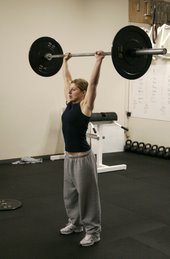
In that spirit, it took a fellow New Englander in the evening class to coin the phrase ‘throwing meat at your feet’ to describe a last-ditch sit-up in which you toss your hands to create enough momentum to sit up. It’s not pretty but more importantly it gets the job done. I’ve been throwing meat– namely my uncooperative left arm – for some time now in the hopes of shaking off whatever shoulder injury was getting in my way while I still managed to get the job of pressing done. Damn my dynasty of the dimwitted.

At some point I had to acknowledge it wasn’t working – with or without the colorful expletives. As a trainer too, I knew my dumb-ass behavior would inevitably invite my clients to join me on my little island of idiocy. We could all compare scars and trade surgeon’s business cards. Besides being a bad career move, I set out to be a trainer not a vigilante.

So I’ve suspended all exploration of the fascinating world called ‘Overhead’. Instead I go rolling around on a Lacrosse ball several times a day in the hopes of locating trigger points and eventually eradicating them. In the meantime Mr. Yuck stickers are wasted on me since I have a special poison control feature called a projectile vomit button on my scapula that can almost make me hurl with a little pressure from the ball. Try rallying yourself to roll over that bad boy six times a day.

Some of you might remember that my last run-in with a lacrosse ball wasn’t so pleasant either. My nephew Gunner was whipping them at me while I did laps around his cul de sac. Apparently he’s an intuitive healer with a calling to cure my ills while I had mistaken him for a bored pain in the ass trying to fill the void that Halo left by making me jump and flinch like a sissy. Sorry sugar, my bad.

While I further cultivate my dysfunctional relationship with all things lacrosse, I couldn’t give training the cold shoulder (I know that’s a really bad pun but I write this stuff to amuse myself). So how do I forge ahead with plans of world domination from here? I feel like the exiled trying to stage a coup.

Harlan, our resident poster child for the down but not out, would have some insight on this. He also graduated from the school of Don’t-be-a-Nancy-boy with top honors. He ignored every red flag in favor of goal posts and finish lines.

Of his history, Harlan said, “Sports included baseball, basketball, track, soccer. Soccer and running continued into and after college. Anytime I got injured be it shoulders or knee, I would find a way to work around the pain or most of the time once I got going the pain went away.”
You’re body doesn’t keep asking politely forever. Eventually it has a relationship-altering hissy fit that tells you it means business. In Harlan’s case it became impossible to ignore really fast.

“My injury was a complete rupture of my rectus femoris tendon. Surgery was immediately because I couldn’t walk or move my leg without reattaching the tendon. For many years before the surgery I had knee problems/pain, which was diagnosed as tendonitis and tendinosis. Both of these signals were ignored and my activity level foolishly did not decline. The injury occurred from ‘overuse’ and not enough rest. Ever since high school, a day didn’t go by without a trip to the gym and/or run. I always wanted to see how hard I could go at the gym and how fast I could run,” said Harlan.

The answer to how hard and fast became, ‘not at all’ for a longer rehab than Harlan cared to ponder after years of constant activity. In his defense, Tendonitis and Tendinosis is commonly tolerated without resolution. If I bothered to get a diagnosis, I’d technically be in the same camp. Obviously, this isn’t the path I want to keep jogging down. The problem is that it takes the right practitioner with the right information to offer a better answer than ‘no exercise until the pain subsides’ especially since it generally doesn’t. For competitive folks with passion and goals, this isn’t enough.

Though I think I found the right practitioner and a workable solution, Harlan did not. Because of that, I’m currently looking at the pre-surgical side of rehab and he’s facing the post-surgical slog. Though we’ve both been slowed considerably, his term is much longer.

Harlan said, “Shifting gears to slow down is almost impossible. The most difficult part is mental; realizing you have brought yourself to a certain point and now all you can do is sit there and watch your body weaken is really tough. To go from being active and athletic as a little kid and throughout adulthood to not being able to workout is tough to handle, especially mentally.”

From what I can see, Harlan is always working. He’s in the gym, adapting the WOD and stretching. Yes, it’s not the same intensity but his commitment hasn’t waivered. For me, I’ve been able to continue the squat protocol and design lots of workouts that focus on my lower body while giving my shoulder a break. The trick is knowing when to start ramping up and knowing what the balance is.

In Harlan’s case, he set aggressive goals which may have been too aggressive. “Obviously I wanted to get through rehab as quickly as possible, in hindsight maybe that was a mistake, but I don’t think so, because I always followed the doctor’s instructions. If the doctor told me 6 months for rehab, my goal would be 4-5 months. The other goal I set for myself is to be smarter about training and get more rest. I would slow down for a few weeks or so and then it was back to the old level of high intensity,” He said.

I keep telling myself that I’ve got two weeks before I’m back to full capacity and even though that too might be an aggressive timeline, I’m not ready to consider alternatives. Frankly, it’s frustrating to be moving away from my goals.

It’s a frustration that Harlan knows. He said, “I didn’t realize how difficult it would be mentally to deal with the lack of exercise. I knew there would be frustrations, but having been through major injuries as a kid, it helps me to deal with the frustrations as an adult.”

Currently, Harlan is facing another surgery to try and repair a knee that hasn’t been healing as expected. It’s hard to say what contributed to that but any time you have surgery, outcomes can vary. It’s why the greater effort should be invested before surgery is necessary. Unfortunately our healthcare system doesn’t have a lot of information to offer about soft tissue treatment other than to address the pain with over the counter medications. This isn’t a solution.

My solutions spackles together a few different approaches. Regarding the trigger point therapy I'm doing, Dr. Ladd Carlston points out, “Trigger point therapy is actually really important and necessary for a more speedy recovery of the muscle - BUT if the shoulder is not balanced, the darn thing will keep getting strained and overworked...” Um, that’s ominous. I’m also working with a massage therapist once a week and an ART specialist in Kirkland as much as necessary. It goes without saying that I’m eating to avoid inflammation, sleeping as much as I can and staying hydrated as general maintenance and to promote healing. If it sounds like a lot of work, it is. But it took a lot of work to break me, too.